
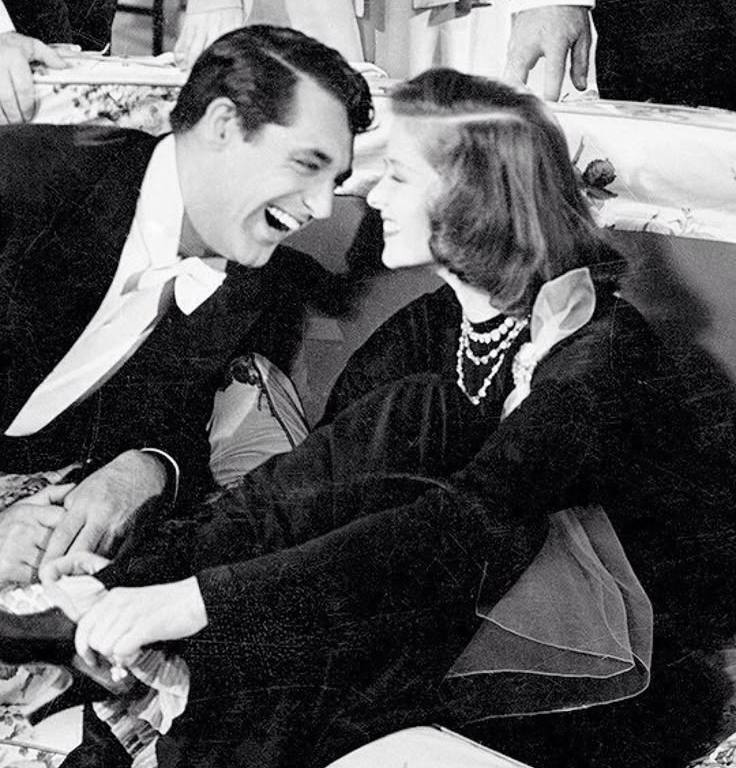
In our next stop along our Katharine Hepburn film study, we remain in the 1930s with George Cukor’s HOLIDAY (1938). Many have considered this film as part of a trio for Hepburn during this time. BRINGING UP BABY (1937) and THE PHILADELPHIA STORY (1940) bookend this film, with all three featuring Kate as wealthy socialite who is privileged but with a heart of gold.

The film HOLIDAY is based on the stage play written by Philip Barry, which premiered shortly following the stock market crash. Barry was supposedly inspired by the real life and siblings of Gertrude Sanford Legendre, a wealthy socialite who defied high society conventions. She went on to live an adventurous life as a big game hunter and then a prisoner of war when captured by the Nazis in France. It opened on November 26, 1928 in New York and closed June 1929, with a run of 229 performances. With the challenges of the Great Depression, it’s a wonder it ran even that long. Katharine Hepburn was the understudy for Hope Williams who portrayed “Linda Seton.” The play was made into film, twice. The 1930 film version was directed by Edward H Griffith and starred Ann Harding (as Linda), Mary Asor (as Julia), Robert Ames (as Johnny Case), Hedda Hopper (as Susan Potter), and Edward Everett Horton (as Nick Potter). Horton would reprise his role in the 1938 film.
In a package deal, Columbia Pictures purchased the film rights to Barry’s play along with other scripts for $80,000. In her autobiography, Hepburn claimed – following being labeled “box office poison” and after she turned down RKO’s MOTHER CAREY’S CHICKENS (1938) – she convinced Columbia producer Harry Cohn to buy the HOLIDAY film rights. As Kate recalled, “I did Holiday on a loan-out from RKO, who were anxious to get rid of me and had offered me Mother Carey’s Chickens, which I had turned down. We made a deal: I would pay RKO $75,000 and they would let me do Holiday for Columbia. Harry Cohn (Columbia) had offered me $150,000.”
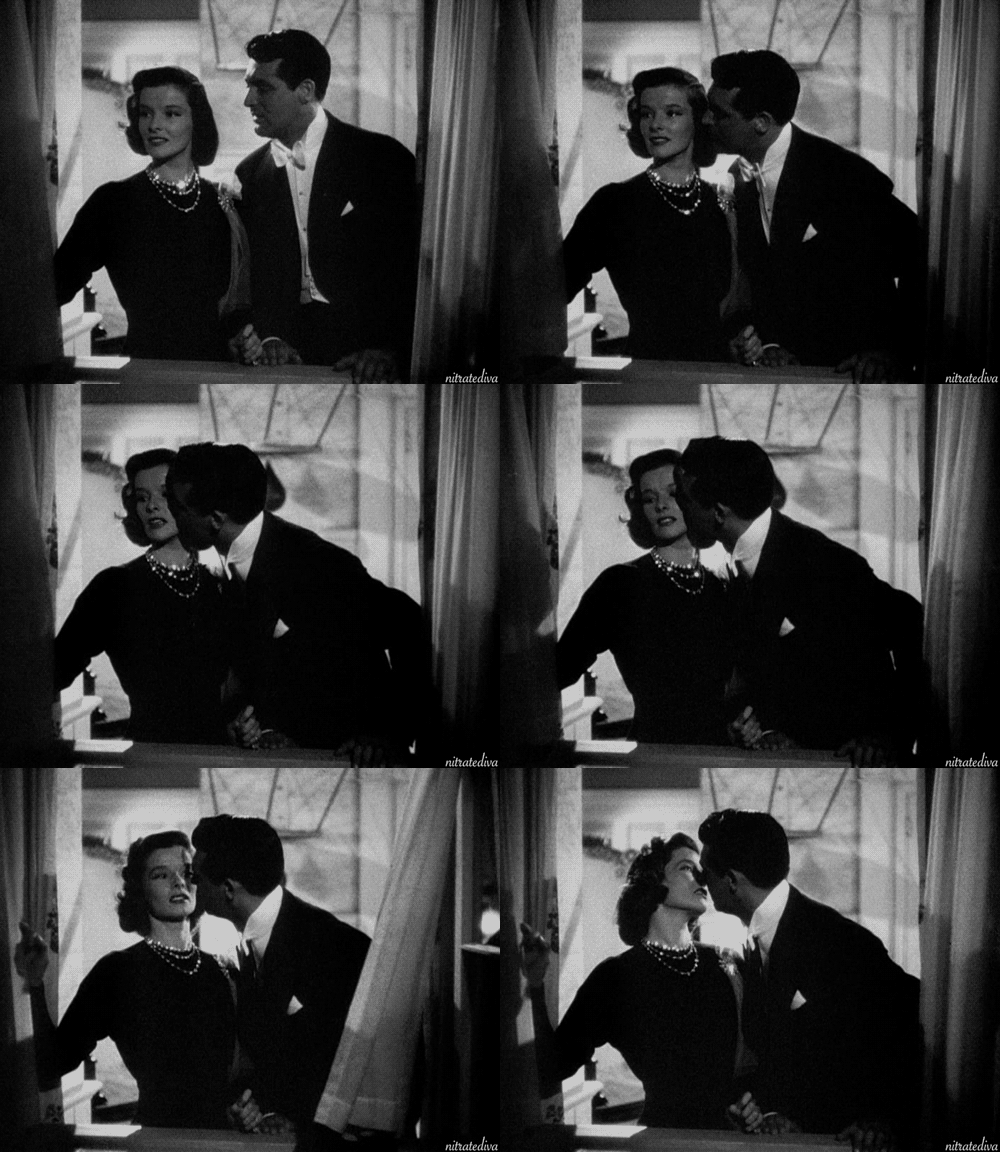
Following the successful pairing of Cary Grant and Irene Dunne in THE AWFUL TRUTH, the duo was expected to be cast in HOLIDAY. However, Cukor kept Grant and borrowed Hepburn from RKO instead. Other initial considerations for “Julia” included Joan Bennett and Rita Hayworth, and Ginger Rogers for “Linda.” Working titles for this film adaption: “Unconventional Linda” and “Vacation Bound.” Kate left RKO soon after.
As we explore the filming of HOLIDAY (1938), it’s noteworthy to discuss Kate’s relationship with Howard Hughes. As we’ve addressed before, while Kate remained on friendly terms with her husband Luddy, they didn’t behave as expected of married couples, starting after their 2-week honeymoon until their divorce in 1934. This was especially true when she moved to Hollywood without Luddy in 1932. As she sampled a couple of relationships, including Leland Hayward who left her for Maggie Sullavan in 1936, and a brief affair with John Ford during the filming of MARY of SCOTLAND (1936), Kate also had a relationship with Howard Hughes.
They first met when Hepburn was filming George Cukor’s SYLVIA SCARLETT (1935) when Hughes landed his plane right next to the filming location. Cary Grant introduced his friend Howard to Hepburn. Hughes had been rumored to wanting to meet Hepburn and she brushed him off, finding his approach too pushy. Next time, he landed his plane right on the golf course Kate was playing on the 9th hole. Months later she was in a stage production of “Jane Eyre” and he followed her on tour, staying at the same hotel. He was persistent and undaunted and soon they started dating. They were living together at friend Laura Harding’s New York apartment when Howard (“HH” is what Kate called him) flew around the world, breaking a record and Kate followed his updates from home. They swam, golfed, and flew everywhere together. HH taught her how to fly. Kate recalls in her autobiography the time she took off under the 59th street bridge.
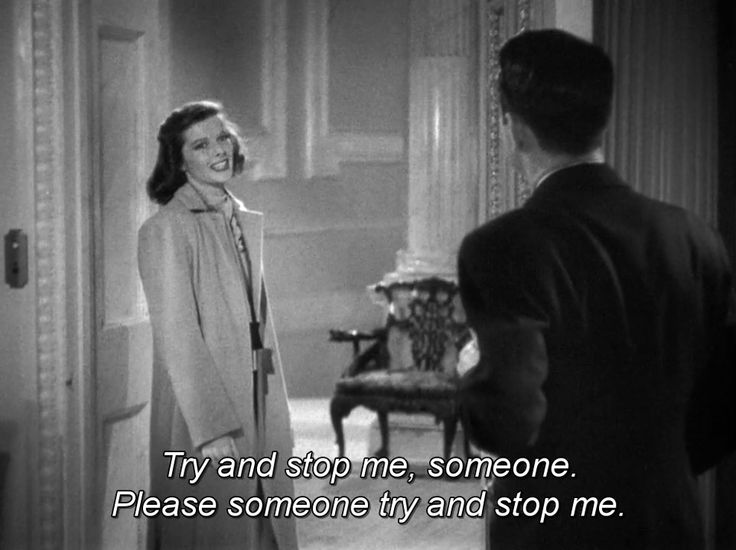
By the time filming on HOLIDAY wrapped up, the bad press of Kate being the leader of the “box office poison” list was circulating. Paramount sent her an offer with a script for a salary of $10,000, which was quite a drop from her typical salary of $150,000. She declined. This upset HH, who assumed she was embarrassed and that it was somehow a poor reflection on him in the public eye. But Kate felt compelled to go back to Fenwick for a break, maybe do another play. The two were aligned well as companions, but as a couple they had reached an impasse…
“Certainly, I felt that I was madly in love with him. And I think he felt the same way about me. But when it came right down to “What do we do now?” – I went East and he stayed West. We’d been together about three years. Ambition beat love, or was it like?”
Technically speaking, HOLIDAY falls into the screwball comedy subgenre. Screwball comedies arose in response to the Great Depression following the end of the Pre-Code period (and thus the end of Prohibition) and concluded in the late 1940s. Signature elements of screwball comedies may include: fast-paced and clever dialogue, farce scenarios, plots that center on marriage, re-marriage, and/or a triangular love story. Often, female leads were portrayed as wealthy socialites were beautiful, eccentric, dressed in the hottest couture, and, frankly, a bit screwy and sometimes hysterical. Due the effects of the Great Depression, screwball comedies would frequently poke fun at the wealthy and display favor towards working class characters.
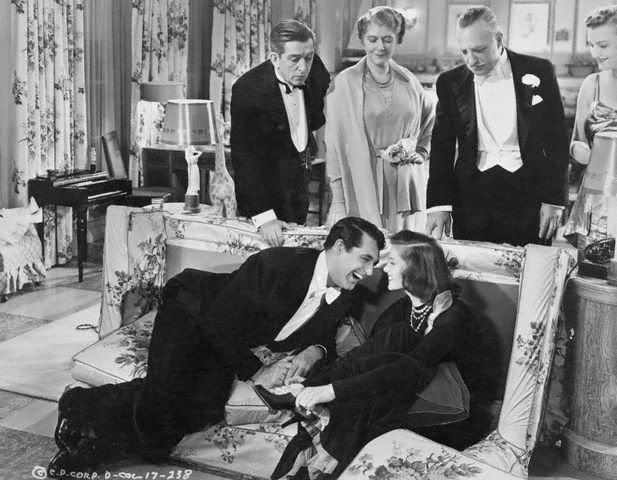
However, as films moved further away from the onset of the stock market crash and the economy slowly began to strengthen, films would soften the criticism of these wealthy characters. As such, it was common to show some wealthy characters as spoiled and unsympathetic, while highlighting one or two characters as born into wealth but rebelling those tropes. Ultimately, those ‘black sheep’ characters of the ultra-elite would be the protagonists in the stories and gain favor of the audiences. We see this idea explored in HOLIDAY (1938) and other films during the late 1930s.
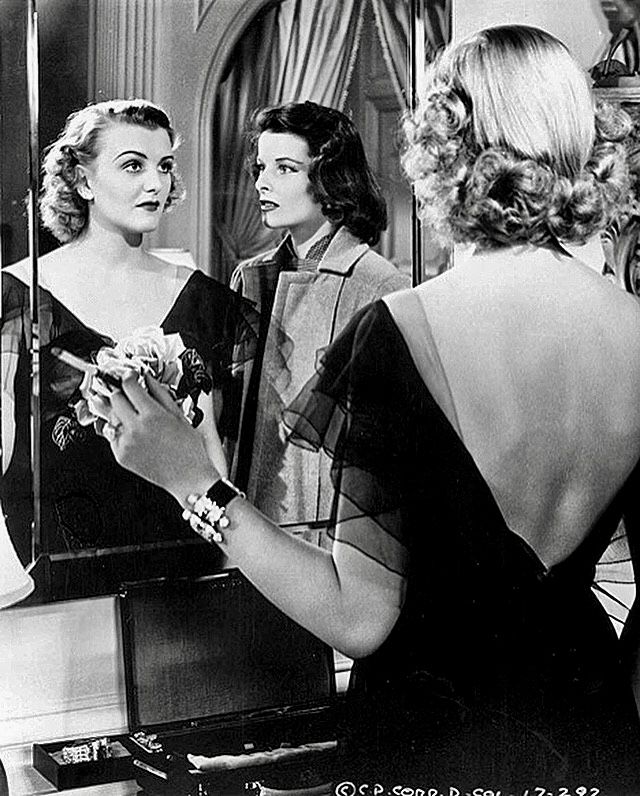
While it may not seem like a traditional comedy or rom-com as we would define it today, screwball comedies would sometimes take a more slapstick approach with broad jokes and physical gags- and other screwball comedies reflected a darker, more subtle style of comedy. Leo McCarey’s THE AWFUL TRUTH (1937) and Howard Hawks’ BRINGING UP BABY (1938) are perfect examples of the slapstick style of screwball comedies. However, HOLIDAY is best described as falling into the other end of the spectrum for screwball comedies. The humor is there but it’s played out in a mostly serious tone overall, with comedy relief moments sprinkled in. For the most part, the Potters (Jean Dixon as Susan and Edward Everett Horton as Prof. Nick) provide the only true comedy breaks. Lew Ayres as the alcoholic brother Ned delivers clever lines that can be described as a cocktail of biting wit and dark realism.
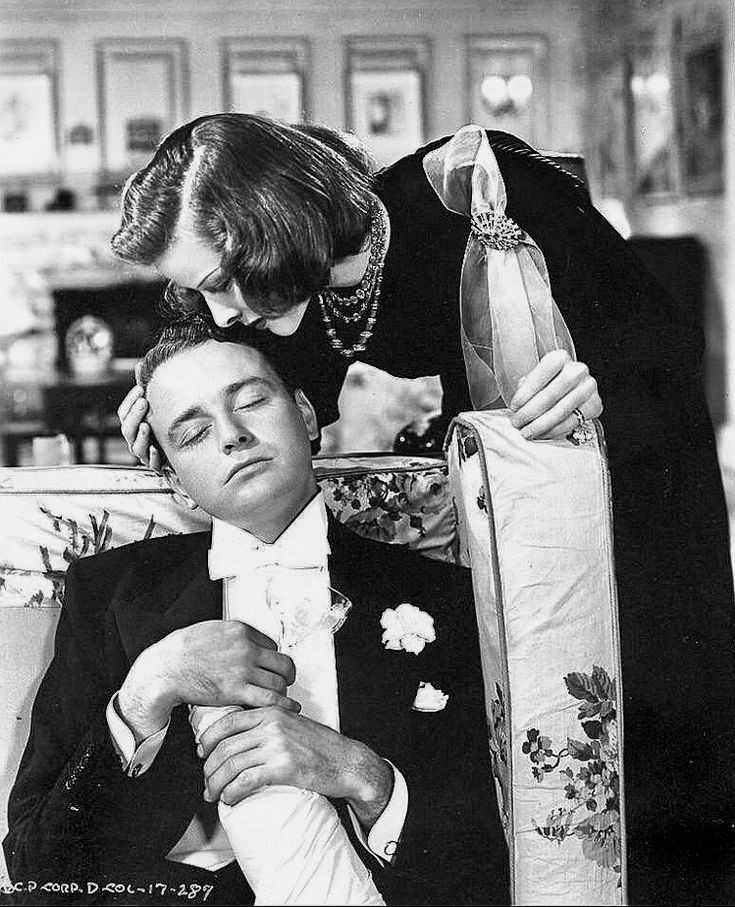
It’s essential in any discussion on Katharine Hepburn to address friend and director George Cukor (1899 – 1983). He worked on even more films with Kate than Spencer Tracy, ten in all. He gained the reputation as a “women’s director” from successful partnering with strong, talented actresses in films such as LITTLE WOMEN (1933), DINNER at EIGHT (1933), THE WOMEN (1939), GASLIGHT (1944), A STAR is BORN (1954) and three Kate and Spencer films. Cukor’s first film directing Hepburn was her very first film in Hollywood, A BILL of DIVORCEMENT (1932) and their last partnership was on the 1979 TV movie, “The Corn is Always Green.” The full list Cukor and Hepburn films…
A Bill of Divorcement (1932)
Little Women (1933)
Sylvia Scarlett (1935) *paired with both Cukor and Grant for 1st time
Holiday (1938)
The Philadelphia Story (1940) *Hepburn nominated for Best Actress Oscar
Keeper of the Flame (1942)
Adam’s Rib (1949)
Pat and Mike (1952)
Love Among the Ruins (ABC TV movie/ 1975) *won 6 Emmys, incl. both Cukor and Hepburn
The Corn is Green (CBS TV movie/1979) *Hepburn received an Emmy nom
HOLIDAY (1938) was Oscar-nominated for Art Direction (Stephen Goosson, Lionel Banks) but didn’t win at the 10th Academy Awards ceremony.
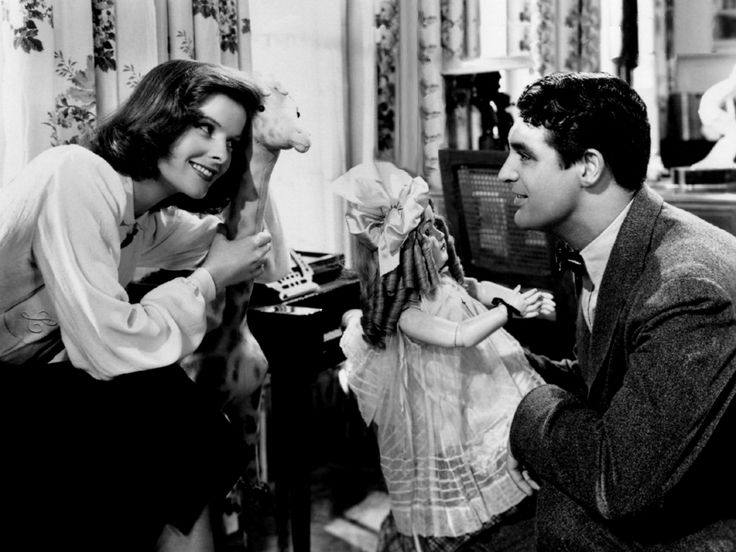
As we screen HOLIDAY, let’s pay attention to the themes of classism. What examples do we see of the signatures of ‘screwball comedy’? The original play received pushback regarding Johnny Case’s principled rejection of the bank job- can you imagine why audiences fresh in the Great Depression may have felt this way? Can we see why audiences may have softened their views and given Johnny a pass by the 1938 film? How would you describe the differences between the toy room and rest of the Seton mansion? Upon entering the toy room, Ned describes a long absence since spending time there- how does this reflect his ability to stand up to his father versus how Linda handles her own rebellion? What do you think happens to Ned following the film’s conclusion? Cary Grant performed his own stunts for this film and we can see how his acrobatic upbringing was useful for this role.
Cast and crew:
Directed by: George Cukor
Writing: Philip Barry (original screenplay), Donald Ogden Stewart and Sidney Buchman (screenplay)
Produced by: Everett Riskin
Cinematography: Franz Planer
Music: Sidney Cutner
Costume Design: Robert Kalloch (Eugene Joseff, jeweller)
Art Direction: Stephen Goosson
Katharine Hepburn- Linda Seton
Cary Grant – Johnny Case
Doris Nolan- Julia Case
Lew Ayres- Edward “Ned” Seton Jr.
Henry Kolker- Edward Seton, Sr.
Edward Everett Horton – Professor Nick Potter
Jean Dixon – Susan Potter *(this was Dixon’s last film before retirement)
Binnie Barnes – Laura Cram
Henry Daniell – Seton Cram
Released: June 15, 1938 (critical success, commercially failed)
Filming locations: Columbia/Sunset Gower studios in Hollywood, Manhattan, NY for exterior shots, and Bishop, CA for opening skiing “Lake Placid” scenes that were later deleted
Sources:
“Me, Stories of My Life.” By: Katharine Hepburn. Penguin Group, NY, 1991.
“Katharine Hepburn: A Remarkable Woman.” By: Anne Edwards. St. Martin’s Griffin. New York. 2000.
“Gertrude Sanford Legendre, 97, Socialite Turned Hunter and Prisoner of War.” By: Enid Nemy. New York Times. March 13, 2000.
“Notes,” via TCM.com
IMDB
“Holiday” (1938), Criterion Collection
 Outspoken & Freckled