
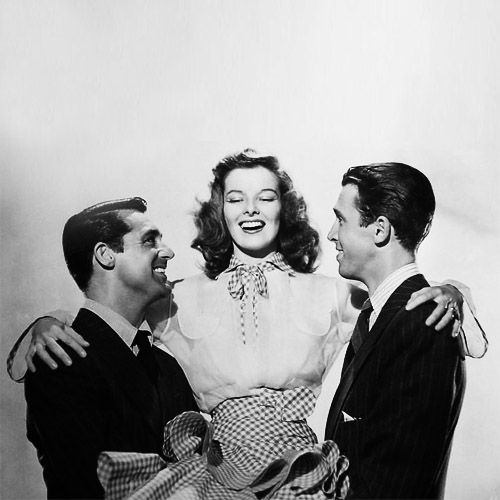
Today’s film is likely known to many of you. A fan favorite for a long time, THE PHILADELPHIA STORY offers yet another glimpse of Katharine Hepburn as a wealthy socialite. However, unlike the several screwball comedies that star Hepburn as the spoiled rich girl that preceded it, this film goes deeper in themes and allows a tailored yet more complex character study for Hepburn.
When we discussed her last film, HOLIDAY (1938), Hepburn’s career in Hollywood was hanging by a thread. She parted ways with RKO and headed back home to her beloved Fenwick, Connecticut. Her relationship with Howard Hughes also parted ways, at least romantically. That summer of 1938 as Kate was strategizing her next career move in between golfing and spending time with family, she was contacted by playwright Philip Barry (1896 – 1949), who shared the exciting news that he wrote a new play, written specifically for her. Barry wrote HOLIDAY and was known for his sophisticated comedies of the 1920s and 1930s. Anxious to hear more, Kate invited Barry to come to Fenwick and discuss further. The very next day, a hurricane hit and swept the Fenwick estate into the bay. Kate rebuilt Fenwick and agreed to portray the lead written for her on stage.
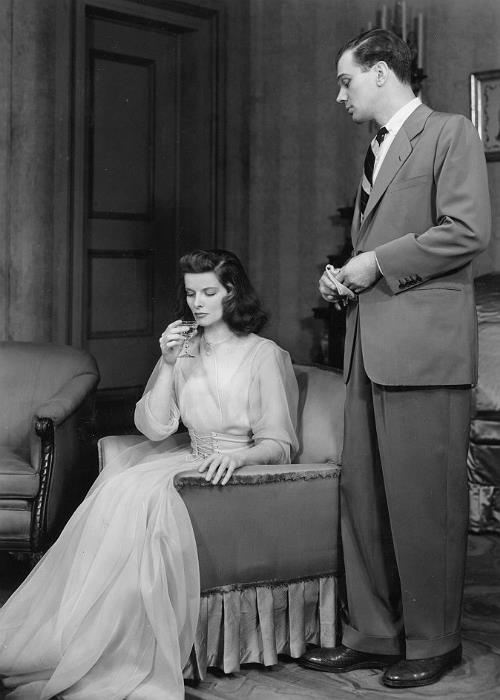
Produced by the Theatre Guild, “The Philadelphia Story” opened March 28, 1939, at the Shubert Theatre in New York City. Barry was inspired by a friend’s wife, socialite Helen Hope Montgomery Scott, for the main character, Tracy Lord. In lieu of a salary, Kate financially backed the play for a percentage of the profits. The stage production co-starred Joseph Cotten, Van Heflin, Shirley Booth, and Dan Tobin. With a successful, full year run on Broadway and money gifted to her by friend Howard Hughes, Katharine secured the film rights. She negotiated a contract with MGM for $250,000 that allowed her veto rights for the director (George Cukor), producer (Joseph L Mankiewicz), screenplay (Donald Ogden Stewart), and cast, which assured her spot in the lead. She wanted Clark Gable and Spencer Tracy, the biggest stars at that time, for the male leads, but they turned it down. The roles ultimately went with Cary Grant (1904 – 1986) and James Stewart (1908 – 1997).
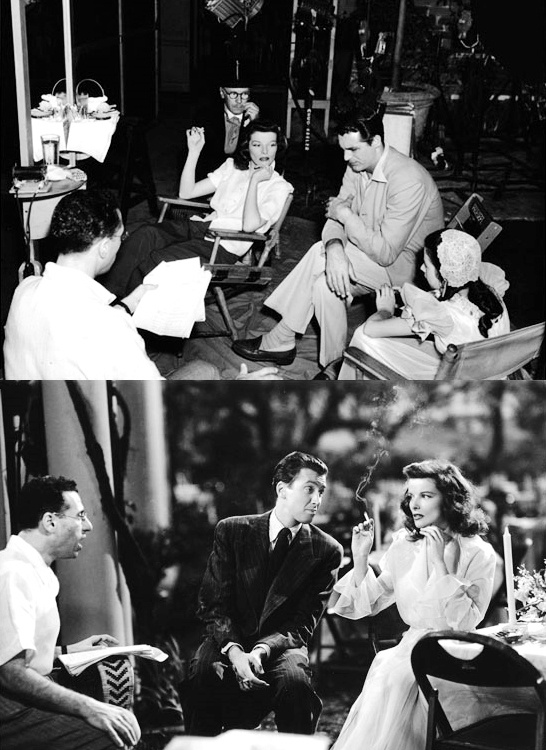
Kate was already comfortable working with Cary Grant and knew he was ideally suited chemistry for a screwball comedy. This was their fourth and final film together. Stewart had proven he possessed skills and the popularity as an actor who could do comedy, westerns, romance, as well as drama. In the year prior to THE PHILADELPHIA STORY he made: MR. SMITH GOES to WASHINGTON, DESTRY RIDES AGAIN, SHOP AROUND the CORNER, THE MORTAL STORM, and screwball comedy NO TIME for COMEDY. James Stewart won the Best Actor Oscar for his role as “Macaulay Connor” in THE PHILADELPHIA STORY. Many believe this was the Academy’s attempt to make up for Stewart not winning the Oscar for his compelling performance in MR. SMITH GOES to WASHINGTON. However, his reaction was that his Oscar should’ve gone to his friend Henry Fonda for his iconic performance in GRAPES of WRATH (1940) instead.
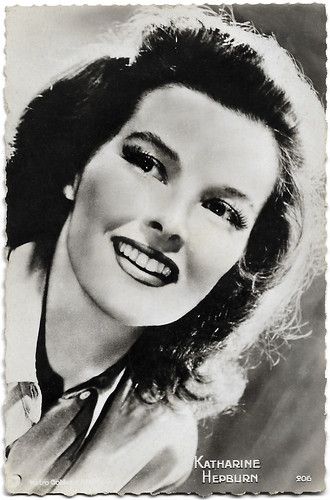
In her autobiography, Kate describes her process in meeting with shrewd yet candid LB Mayer of MGM who was interested in her Philadelphia property:
He [Mayer] then asked me what I wanted for it, and I told him. I told him that I wouldn’t be making any profit. I said, “What interests me is who I play with, because people say that I am poison at the box office. I want it cast.”
He said, “Who do you want?”
I said, “Give me Tracy and Gable.”
He said, “I don’t think they’ll do it.”
I said, “I presumed that they probably wouldn’t, but ask them.”
He said, “yes, I will ask them.”
He did and they wouldn’t do it. Then he said, “I can give you Jimmy Stewart, because we have control over him.” Then he added, “I’ll give you a hundred fifty thousand dollars to get anyone else you want or can get. You get them. You can name the director.”
I said, “I would like George Cukor to direct it.”
He said, “Fine.”
Then we got Cary Grant for the $150,000 for three weeks’ work. He said that he would do it and that he wanted first billing over me. “OK,” I said, “that’s easy.” He gave his salary to the Red Cross. We had him for three or four weeks. He had his choice of part and Jimmy Stewart played the other part. Incidentally, Jimmy won the Academy Award.
*In case you’re wondering, 2025 value for $150,000 in 1940 would be $3.4 million dollars (adjusted for inflation) that Cary Grant donated to the Red Cross, which was his way of giving to the ongoing war efforts, as his home country and the rest of Europe battled Hitler. Grant was known to be very generous in this way, for a man with a reputation for being very frugal.
In the spectrum of screwball comedies, THE PHILADELPHIA STORY lands firmly in the subtlety of sophisticated comedy subgenre. Like so many screwball comedies, a female character is central to the narrative and drives the story. However, by 1940, often with higher production values and budgets, films were moving away from the stage-like sets. You feel like you’re walking into an actual room, not a play in a theatre. Realism is on trend. Acting is frequently a more natural style, less over-the-top, less campy, less wooden, even when playing the wealthy set. One of the signatures of a screwball comedy is fast-paced dialogue and verbal banter. That is essentially absent from THE PHILADELPHIA STORY. As such, audiences continue to warm up to, and even sympathize, with these ultra-elite which they had resented and parodied years earlier.
A key hallmark of screwball comedy that remains in full flower here is the re-marriage/love triangle theme. Sort of. Afterall, there is not two but three potential suitors for Kate’s “Tracy Lord.”
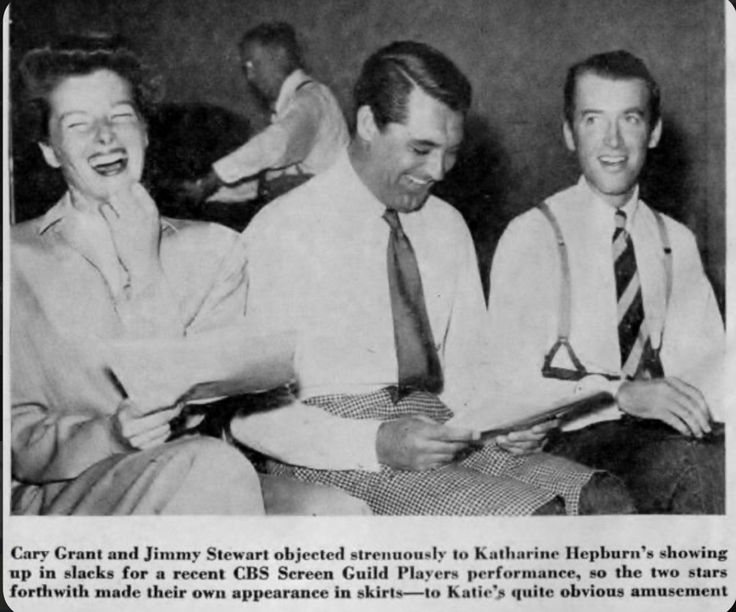
Typically, with enforcement of the Production Code, divorce and adultery would be downplayed, avoided, or even punished. Yet in THE PHILADELPHIA STORY like many screwball comedies, divorce and adultery are the main plot. Censors would allow these themes but only if navigated carefully- generally with extenuating circumstances or an outcome of reconciliation. One reason we see these themes so prevalent continuing even following the Pre-Code era, is because while divorce statistics were low at the beginning of the 20th century, it grew more significantly starting in the 1920s. During the Great Depression, there was a slight dip in divorce rates, but otherwise, each decade continued to rise thereafter. After a peak of divorce rates in the 1980s, there has been a decline since. By 1940, the societal stigma of divorce was softened, yet the economic factors for women remaining in unhappy marriages wouldn’t be changed legally until the 1970s through the 1990s.
Just like we explored in HOLIDAY, THE PHILADELPHIA STORY also centers on classism and the unique differences in the wealthy class. Between 1940 and 1960, a new middle class emerged in America. Following the Great Depression, the U.S. economy didn’t reach full employment until 1940. (This would be disrupted shortly after when America joined WW2 in 1941.) We see examples of the Lord family wealth in their house, clothing, and stables, and as “Tracy” makes casual references to the various mansions and land across this area of Philadelphia. But we see this best when in contrast with her fiancé, George Kittredge (John Howard, 1913 – 1995), and when reporters “Macaulay Connor” (Jimmy Stewart) and “Elizabeth Imbrie” (Ruth Hussey, 1911 – 2005) come to visit.
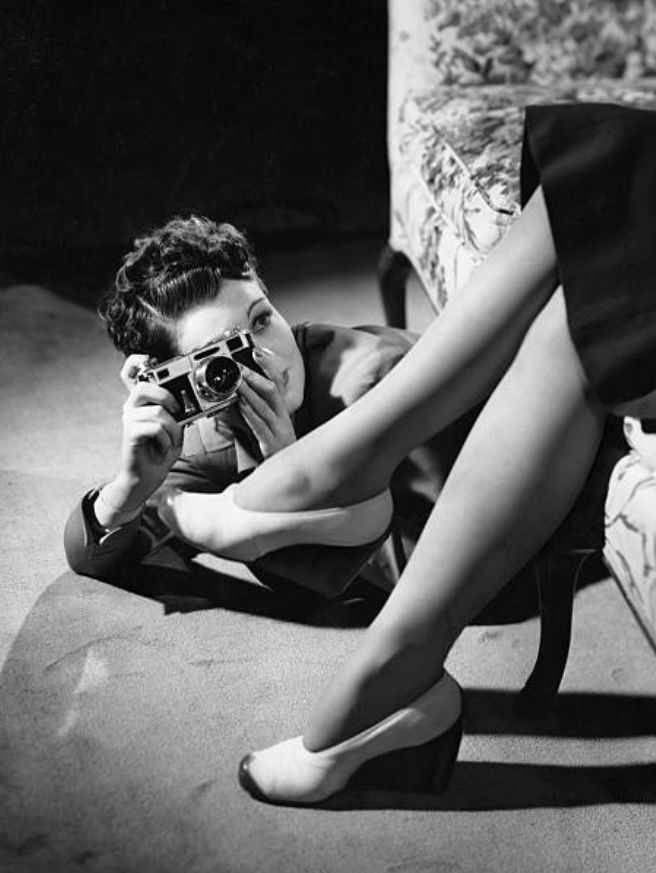
One example distinguishing Tracy’s ‘old money’ is when she tackles George to rub dirt into his brand-new riding outfit. He’s bewildered because he’s worked hard to go from poor working class at the coal mine, to management at that same coal mine. He buys clean, new riding clothes just to have Tracy mock him for looking so nouveau riche. As an audience, we already wonder if this will work out. Another obvious example is played out in a comedic scene when Macauley and Elizabeth first meet Tracy and her younger sister “Dinah Lord” (Virginia Weidler, 1927 – 1968). Tracy and Dinah try to scare off the tabloid reporters by behaving eccentrically, parodying stereotypes of the wealthy.
It’s in this moment that we’ve come full circle within the subgenre of screwball comedy. What started out as mocking the wealthy following Pre-Code era of the Great Depression, has now evolved into the wealthy mocking the wealthy. This film does a good job of highlighting the blurred lines of the wealthy and middle class, while also defining them separately. Just as the middle class is growing more robustly in 1940 America, the characters in this film flirt those lines, too. Not just with Tracy’s engagement to George, but quite literally, as Tracy and Macauley flirt a romance, as well.
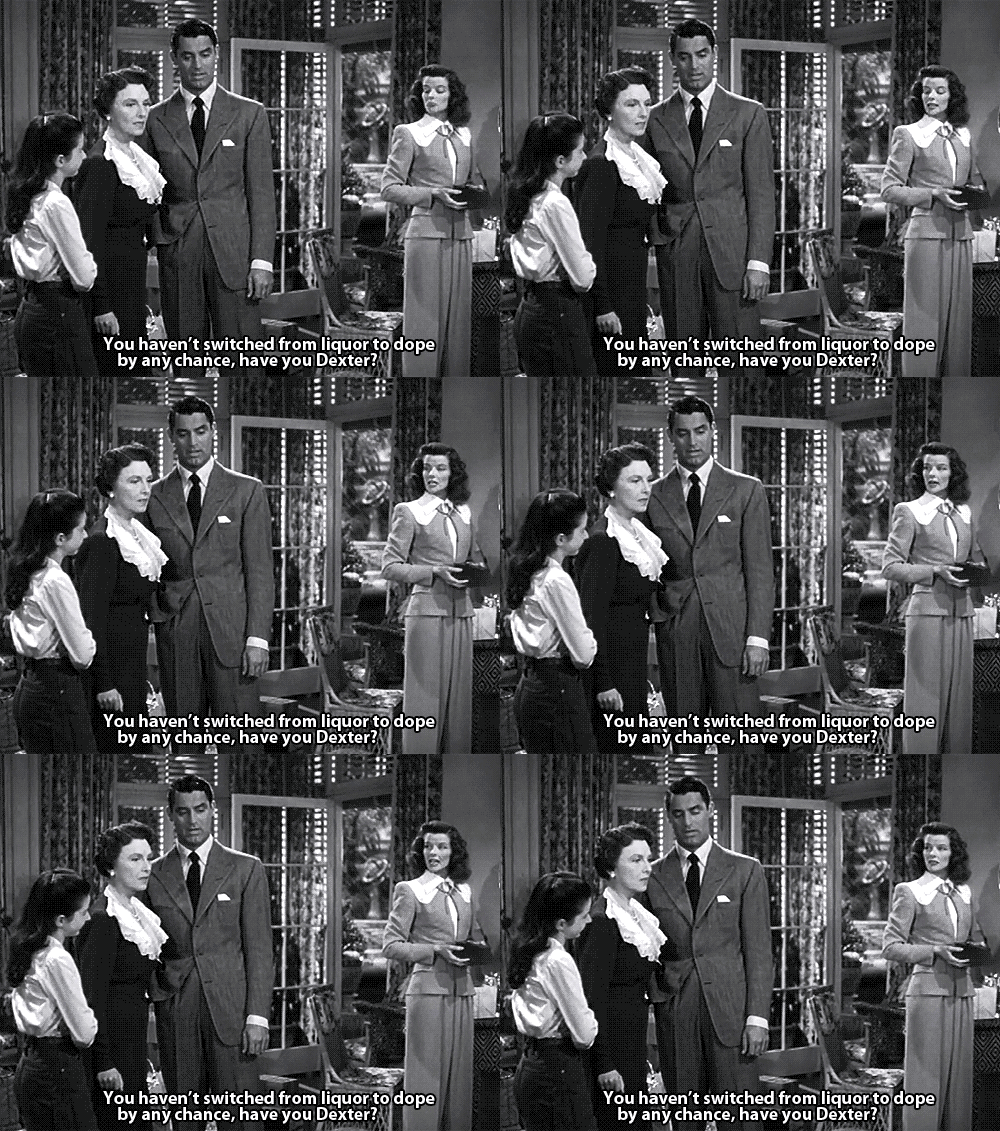
Now to discuss the elephant in the room. I must profess that I have mixed feelings about this film. On one hand, it is a marvelous film with top notch cast and crew performing their best with delightful scenes. However, I’ve never felt comfortable about Tracy’s relationship with her father, “Seth Lord” (John Halliday, 1880 – 1947) with the overall tones of misogyny. As a classic film fan, one learns to place sexist dialogue and scenarios in context of its time. Usually, anything overt is handled with humor, even back then. However, the problematic misogyny here is mostly in a serious tone. And centers on the strange relationship between Tracy and her father and his adultery.
In a revealing scene, we not only discover that his adultery is accepted by Tracy’s mother, “Margaret Lord” (Mary Nash, 1884 – 1976) but that both, more so by Mr. Lord, blame Tracy for not getting on board with it like her mother. It is in this moment that he insults Tracy, referring to her as not having an understanding heart, as though made of bronze. He calls her a prig and a perennial spinster. He goes as far as stating that he began seeking out young women in pursuit of his own youth, even to replace his young daughter. “The right kind of daughter,” one that never questions him. He then says that her criticism of him makes her the jealous daughter. It’s not so subtle- but borderline incestuous and victim blaming at worst, and the most bizarre excuse for adultery at best. To make matters worse, this overall sentiment that Tracy is the beautiful, icy statue is repeated by nearly everyone in her life, whether they attempt to understand the origin of that subtext. Whenever Dexter joins in on insulting or mocking Tracy, her family usually sides with him. It is only in the very end, when Tracy submits to a vulnerable position of acceptance, do both Dexter and Mr. Lord warm up to Tracy. A classic example of gaslighting.
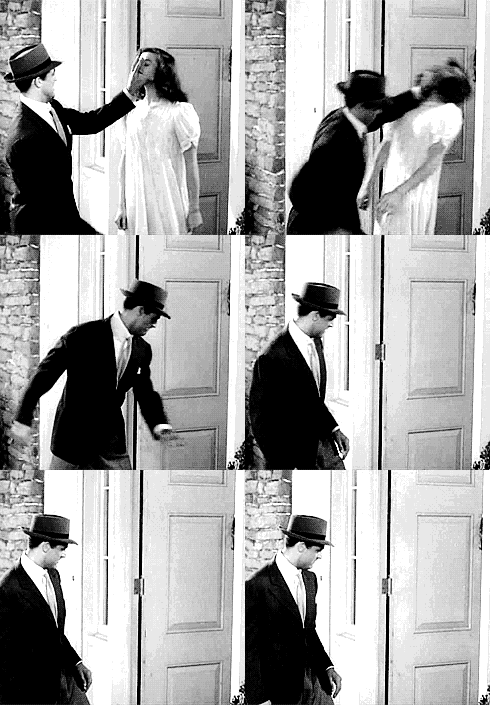
There are also suggestions of domestic abuse history between Tracy and Dexter, starting with the very first scene. However, I will give that one a pass because it is either handled with slapstick or merely implied. Some have criticized this as another example of misogyny. On the plus side, Hepburn remains the driving force of this story and, behind the scenes, was the driving force of getting this film made.
THE PHILADELPHIA STORY won 2 Academy Awards- Jimmy Stewart for Best Actor in a Leading Role and Don Stewart for Best Writing, Screenplay. Additionally, it was nominated for Best Picture, Kate Hepburn for Best Actress in a Leading Role, Ruth Hussey for Best Actress in a Supporting Role, and George Cukor for Best Director.
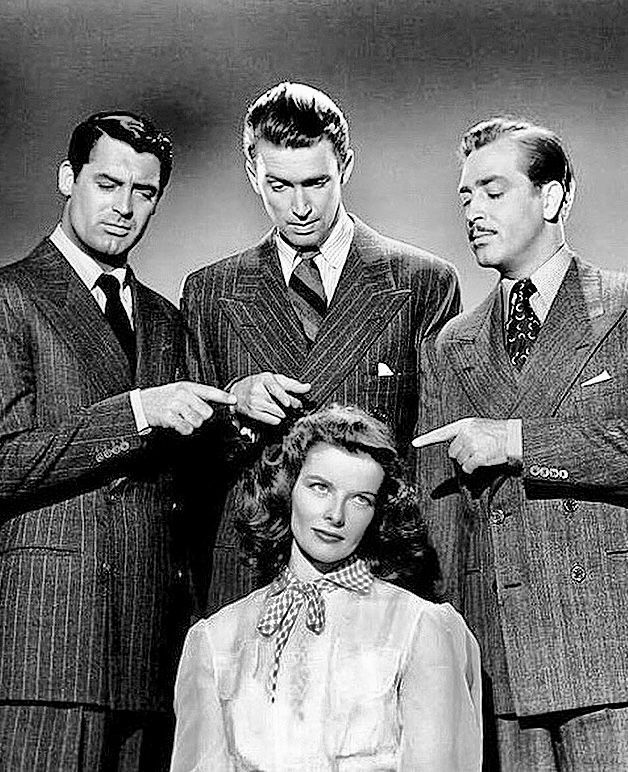
As we discuss various aspects of THE PHILADELPHIA STORY, where do you see examples of classism? And, signatures for a screwball comedy? How do the performances and dialogue make this a fan favorite? What are your favorite moments? How does this film explore the differences in marriage from Mr. and Mrs. Lord’s generation to Tracy and Dexter’s? Do you find any scenes problematic of misogyny? How does this film infuse humor and through which characters? To what lengths are Dexter and Tracy willing to go to protect the Lord name/reputation? How do each member of the wealthy class and the middle class in this story misjudge or misunderstand about each other?
Cast and Crew:
Directed by: George Cukor
Produced by: Joseph L Mankiewicz
Written by: Philip Barry (original story), Donald Ogden Stewart, Waldo Salt (screenplay)
Music: Franz Waxman
Cinematography: Joseph Ruttenberg
Art Direction: Cedric Gibbons
Set Decoration: Edwin B Willis
Costume Designer: Adrian
Katharine Hepburn- Tracy Lord
CK Dexter Haven- Cary Grant
James Stewart- Macauley Connor
Ruth Hussey- Elizabeth Imbrie
Virginia Weidler- Dinah Lord
Mary Nash- Margaret Lord
John Howard- George Kittredge
Roland Young- Uncle Willie
John Halliday- Seth Lord
Henry Daniell- Sidney Kidd
Released- December 26, 1940 (USA)
Filming- MGM studios in Culver City, CA
Sources:
“Me, Stories of My Life.” By: Katharine Hepburn. Penguin Group, Ny, 1991.
“The Real Philadelphia Story.” By: Ian Irvine. ReelClassics.com
“The Philadelphia Story.” By: Mary Anne Melear. TCM article, “Notes.”
“The Philadelphia Story (review).” By: Herb Golden. Variety. November 26, 1940.
 Outspoken & Freckled