

Get your hankies ready. Today, we’re discussing George Stevens’ PENNY SERENADE. This is the third feature film pairing of Cary Grant and Irene Dunne. While audiences had seen both Dunne and Grant in some dramatic roles in the 1930s, each had gained their biggest successes via comedies. This film takes a dramatic turn to melodrama.
Director George Stevens (December 18, 1904 – March 8, 1975) was a cinematographer/actor/writer/producer/director who was known for making some of the most significant and beloved American films of the Golden Hollywood era, across a variety of genres and studios. He began making shorts for Universal and RKO in the early 1930s, then transitioned to features, including films for Hal Roach. Comedy was his sweet spot, but he was ready to take on something with more sentimental drama. He had worked with Grant prior on GUNGA DIN (1939), which showcased a blend of drama with comedy, with a touch of sentimentality. Stevens would work again with Dunne in the fan-favorite, I REMEMBER MAMA (1948), which was nominated for five Oscars, including a Best Actress nom for Dunne.
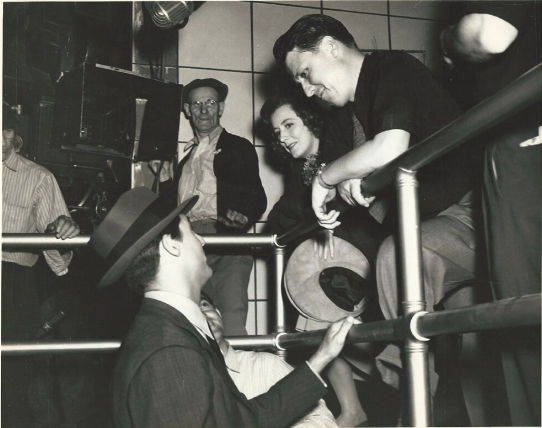
George Stevens would go on after PENNY SERENADE to create the biggest films of his career. He was nominated for the Academy Award for: THE TALK OF THE TOWN (1942, Columbia), THE MORE THE MERRIER (1943, Columbia), SHANE (1953, Paramount), THE DIARY OF ANNE FRANK (1959, Twentieth Century Fox). And he won the Oscar for A PLACE IN THE SUN (1951, Paramount- Best Director- nominated for Best Picture), and GIANT (1956, Warner Brothers – Best Director- nominated for Best Motion Picture). He earned the Irving G Thalberg Memorial award and Lifetime Achievement award from the Academy in 1954. During WW2, he served as an Army lieutenant colonel who led the Signal Corps unit that filmed D-Day and the liberation at the Dachau concentration camp, for which he was awarded the Legion of Merit.
Like Grant, comedy came naturally for Irene Dunne but she too shined in dramatic roles with strength. But her early aspirations were much more musically focused. Irene Marie Dunn (December 20, 1898- September 4, 1990) was born in Louisville, Kentucky, the daughter of a river steamboat engineer/inspector father (whose job duties kept him on the move back and forth from Kentucky and St. Louis) and a concert pianist/teacher mother. Irene was very close with her father, who died of a kidney infection when she was fourteen years old. Irene had an older sister who died shortly after birth, and a younger brother named Charles. She was raised as a devout Roman Catholic and remained extremely active in the church her entire life.
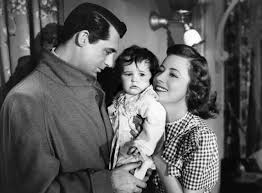
Growing up in a musical household, from a young age she learned the piano, took singing lessons, participated in school play productions, sang at local churches. With aspirations of becoming a music teacher, she graduated from the Indianapolis Conservatory of Music, then shifted to hopes of becoming an opera soprano singer and attended the Chicago Musical College, but auditions revealed her voice wasn’t strong enough for that path. Instead, Dunne kept busy in the 1920s in musical theater on the road, in New York, and made her way to Broadway. It was during this time in the late 20s that she decided to keep that “e” at the end of her last name after frequent misspellings on playbills. While performing in a Florenz Ziegfeld Jr stage adaption of “Show Boat,” an RKO talent scout was in the audience, then Dunne was headed for Hollywood. In her personal life, Dunne married dentist Dr. Francis Griffin in 1927, although he held initial reservations about the morality of the industry of her chosen career. But their marriage had staying power, even with her ongoing success as a top actress in Hollywood. Dr. Griffin:
“When she had to go on location for a film, I arranged my schedule so I could go with her. When I had to go out of town, she arranged her schedule so she could be with me. We co-operate in everything. […] I think a man married to a career woman in show business has to be convinced that his wife’s talent is too strong to be dimmed or put out. Then, he can be just as proud of her success as she is and, inside he can take a bow himself for whatever help he’s been.”*
After retiring from dentistry, Dr. Griffin was very active in several businesses, and they invested in real estate from California to Las Vegas. Griffin died in October of 1965. In 1936, Dunne and her husband adopted their daughter, Mary Frances (aka Anna Mary Bush, born in 1935, with the adoption finalized in 1938) from the Sisters of Charity of New York’s NY Foundling Hospital. Mary Frances died in 2020. But Irene was very close and active with grandchildren, Ann Marie and Mark, before her passing.

At the onset of filming PENNY SERENADE, Dunne was already a four-time Best Actress in a Leading Role Oscar nominee [CIMARRON (1931), THEODORA GOES WILD (1937), THE AWFUL TRUTH (1938), LOVE AFFAIR (1940)]. She would be nominated for her final Best Actress Oscar for I REMEMBER MAMA (1949). But PENNY SERENADE would be Grant’s first Academy Award nomination.
“Cary Grant and Irene Dunne had been enormously successful in light, frothy comedy,” Stevens remembered. “I had done something like that previously [and] didn’t want to get involved again. I guess I was in a mood by this time. And so these poor people became involved in my indulging myself with a story I got from [original author] Martha Cheavens … But they became wholeheartedly engaged in it… it was shocking to the audience to see [Grant and Dunne] not having a fine time but relating to two levels of life.”**(per biographer Scott Eyman)

According to Dunne, “One thing about Cary,” she said. “He was afraid of sentiment. He was leery of a scene… in which he had to break down and cry. George Stevens had to convince him that he would never regret having exposed his emotions.” Dunne thought the scene might earn Grant an Oscar, but it was not to be. “He made everything seem too spontaneous,” said Dunne. “[Too] easy. But that is fine acting when people think you’re playing yourself.”**

The character actors, notably Beulah Bondi and Edgar Buchanan, help round out the story. Actress of stage, television, and the big screen Bondi (1889 – 1981) is likely most recognizable as James Stewart’s mother in IT’S A WONDERFUL LIFE (1946) but the depth and quality her filmography reflects some of the best films of all time. She brings the right touch of soft-spoken kindness and maternal compassion for her role in this film. Edgar Buchanan (1903 – 1979) is best known as “Uncle Joe” in his TV roles in “Petticoat Junction,” “Green Acres” and “Beverly Hillbillies.” While he started his younger years as an oral surgeon, he switched to acting with his first film role in 1939. His gravelly voice and light-hearted curmudgeon demeanor made him in-demand in an active television career.
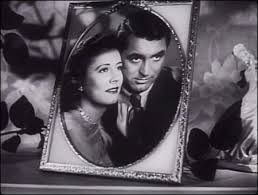
The themes in PENNY SERENADE of marital and relationship challenges, parenting, miscarriage, adoption, love, and death are incredibly relatable to most audiences. These topics were more realistic and authentic than most 1941 audiences were used to seeing on the big screen. The film does a tasteful treatment to these challenges. This film feels relevant to this day, and as such, it truly hits a chord for many. Even the comedic, lighter moments—such as the bathing scene and the school play — feel universally familiar to many families, especially new parents.
Some things to consider while screening this film…
PENNY SERENADE was released in April 24, 1941. To give perspective, the Pearl Harbor attack occurred December 7, 1941 and America soon responded by entering WW2. However, Europe had already engaged in the war since September of 1939, when Germany invaded Poland, with Cary’s birth country of Great Britain and France declaring war against Germany. By April of 1941, Germany and Axis forces invaded Yugoslavia and Greece. By April 10, Croatian separatists seized power to create an independent state of Yugoslavia, with German and Italian support. Since early in 1941, America had been supplying the UK in this fight, while pressuring Japan to cease its expansion across the Pacific. Why does this matter to this film? It means, that while America was not quite in the war, global tensions were building, and many Americans were watching very closely. For Cary Grant, war was already hammering his home country and he was sending funds to the war relief in Great Britain. As things were unraveling rapidly world-wide, this would’ve been on the minds of American audiences. The more serious notes found in PENNY SERENADE may not have been as well received a couple years prior, but 1941 audiences were beginning to face harsher realities at home.
How does the film handle these topics (as mentioned above)? In your opinion, are these tough issues addressed in a heartfelt yet approachable way?
Do the comedic touches balance the melodrama?
What aspects of Grant’s performance earned him an Oscar nom? Any particular scene/s?
How do the performances of the character actors help to balance out the story?

Sources:
1.Hyams, Joe (April 27, 1958). “‘Be A Trailer’ Irene Dunne’s Husband Says”. The Daily Boston Globe. *
2.Eyman, Scott (2020). “Cary Grant A Brilliant Disguise.” Simon & Schuster.
3. “War in the Balkans, 1941-45” Invasions. National Army Museum. Nam.ac.uk/explore/
IMDB
Cast and crew:
Irene Dunne – Julie Gardiner
Cary Grant – Roger Adams
Beulah Bondi – Miss Oliver
Edgar Buchanan – Applejack
Ann Doran – Dotty
Eva Lee Kuney – Trina (at 6 yrs old)
Leonard Willey – Doctor Hartley
Wallis Clark – Judge
Walter Soderling – Billings
Jane Biffle – Trina (as 1 yr old baby)
Directed by: George Stevens
Writing credits: Morrie Ryskind, Martha Cheavens (story by)
Produced by: George Stevens, Fred Guiol
Director of Photography: Joseph Walker
Music by: W Franke Harling
Film Editor: Otto Meyer
*This article was originally offered to my class when I taught a Cary Grant Film Study course in the Autumn of 2023, as part of my ongoing classic film series.
 Outspoken & Freckled
Such a poignant and beautiful film. Lovely performances from Cary and Irene.
LikeLiked by 1 person
I greatly enjoyed reading your insights on this movie, as well as the background on the production. It’s one of the few tearjerkers, though, that I’ve only seen once and have no desire to see again. It was just too much tearjerking going on!
Karen
LikeLiked by 1 person
I hear ya, Karen. It’s a heart-wrecking journey to watch this film!
LikeLiked by 1 person