
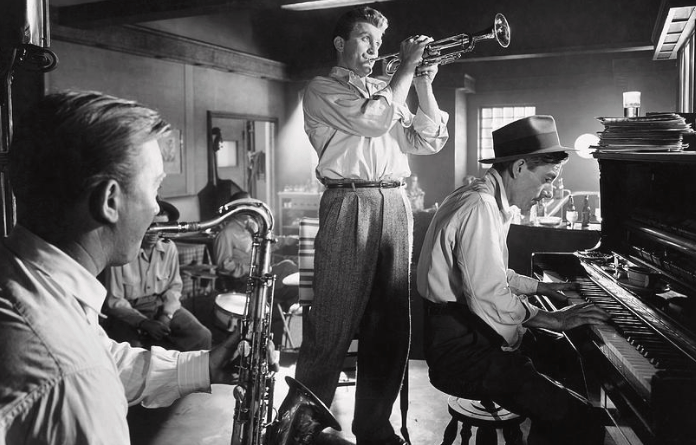
As we cruise farther along our Michael Curtiz journey, today we’re pulling over to a little jazz club to discuss, YOUNG MAN with a HORN (1950). At this point, we have explored a variety of film genres that Curtiz not only explored but excelled in directing. Now let’s look at a film that is not only a biopic, but a musical biopic.
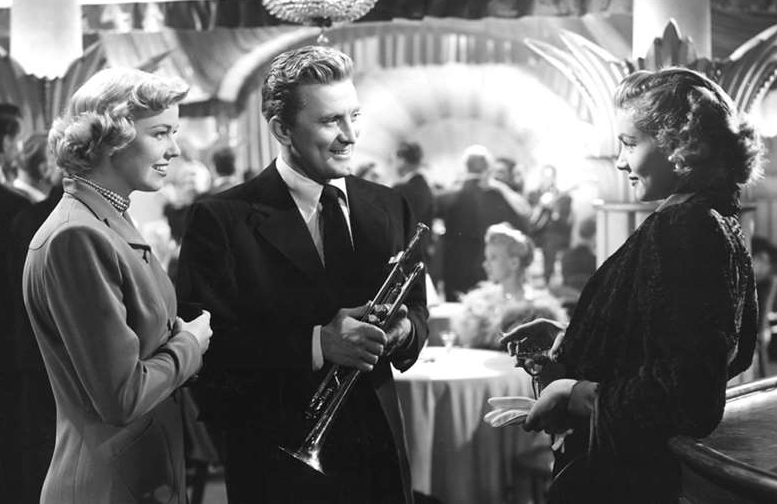
American novelist Dorothy Baker (1907 – 1968) was passionate about writing and jazz. “Young Man with a Horn” was her first novel, published in 1938 and is based on jazz cornet/piano/composer, Bix Beiderbecke. In real life, Baker held several degrees and was married to a poet, Howard Baker. Dorothy held a lifelong interest in music. She wrote several novels, plays, short stories, even ran a theater and a citrus farm, in addition to raising two daughters. Three of her novels, including “Young Man with a Horn,” reflect lesbian-leaning characters.
By 1950, Michael Curtiz had his fill with his production company pursuits. He would have that title as producer attached to his name on only one more film for the remainder of his career. Curtiz continued to direct with Warners by the time producer Jerry Wald (1911 – 1962) requested Curtiz for a new film idea, YOUNG MAN with a HORN. Wald started his career as a screenwriter in the 1930s and grew into a producer with Warner Brothers by the ‘40s with a reputation as an ideas man with a clear vision. He was instrumental in creating top films that were often female-centric and boosted the careers of Joan Crawford (MILDRED PIERCE, 1945), Claire Trevor, Lauren Bacall, (KEY LARGO, 1948) Jane Wyman (JOHNNY BELINDA. 1948).
Wald brought in screenwriters Edmund North and Carl Foreman to adapt Dorothy Baker’s novel into a screenplay. Baker’s YOUNG MAN with a HORN took Beiderbecke’s real life and took a few liberties (also to avoid legal challenges) in the creation of the main character, Rick Martin. As she wrote in her novel’s preface: “The inspiration for the writing of this book has been the music, but not the life, of a great musician, Leon (Bix) Beiderbecke, who died in the year 1931. The characters and events of the story are entirely fictitious and do not refer to real musicians, living or dead, or to actual happenings.”
Bix’s real life was a tragic one, of a great talent who succumbed to alcoholism by the age of 28. In the novel, “Rick” lives a couple years longer. Despite Kirk Douglas’s and Michael Curtiz’s objections, Jack Warner insisted on a more upbeat Hollywood ending for the movie. There are also some differences in the childhood family support of between Biederdecke’s real life, the novel, and the film. Another change, Hoagey Carmichael and Doris Day’s characters are African American in the novel. Not to mention the musical instruments.
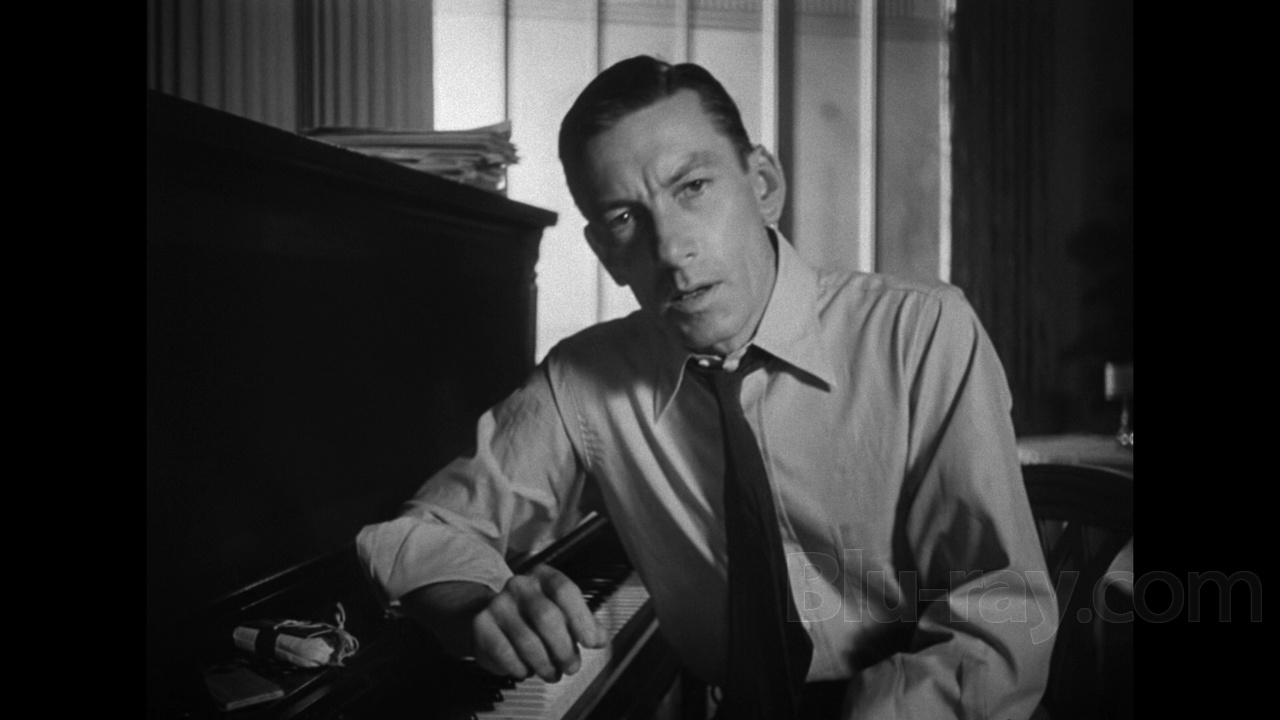
One aspect to the film that was especially appropriate was the casting of Hoagy Carmichael as “Smoke.” Carmichael was close friends with Biederbecke. Knowing this, he was an instrumental choice in casting and his insider knowledge was invaluable on the set. This film is a cinematic reunion of Carmichael and Bacall since their performances in the film, TO HAVE and HAVE NOT (1944). Hoagy Carmichael (1899 – 1981) was not formally trained other than what his piano teacher mother taught him and a few piano lessons. But he began playing from a young age. The family struggled financially but Hoagy was determined to never face poverty after his little sister died when she was only 3 yo due to inability to afford good healthcare. He went on to earn a bachelor’s degree and went to law school. But music was in his bones. He was not only a musician, composer, and songwriter, he was incredibly successful. Of his several hundred songs that he composed, a significant number were huge hits, including “Georgia on My Mind,” and “Stardust.” He earned an Academy Award nomination for his song, “Ole Buttermilk Sky” in 1946. In 1951, he won the Academy Award for Best original Song for “In the Cool, Cool, Cool Evening.” Carmichael also appeared in about a dozen films and a tv series. YOUNG MAN with a HORN was his eighth film role.
Carmichael met Biederbecke in 1922. They remained friends and collaborators. Bix introduced Hoagy to Louis Armstrong about a year later. Carmichael’s first recording was a song written for his pal, Bix. Biederbecke died in 1931. Eventually Carmichael would evolve past “hot jazz” and into the big band sound, which became more popular following The Great Depression and into WW2 era, which is approximately when he transitioned into Hollywood opportunities, too. Carmichael’s oldest son born in 1938 was named, “Hoagy Bix.” After wrapping up production, both Carmichael and Curtiz thanked each other, and Wald thanked Carmichael for beefing up the script with authenticity, via glowing letters of gratitude. For his role of Smoke, Hoagy scribed to Curtiz: “Of the movies I made, Young Man with a Horn was a favorite of mine because my character was well-written… I honestly felt properly dedicated to the part as a musician.”
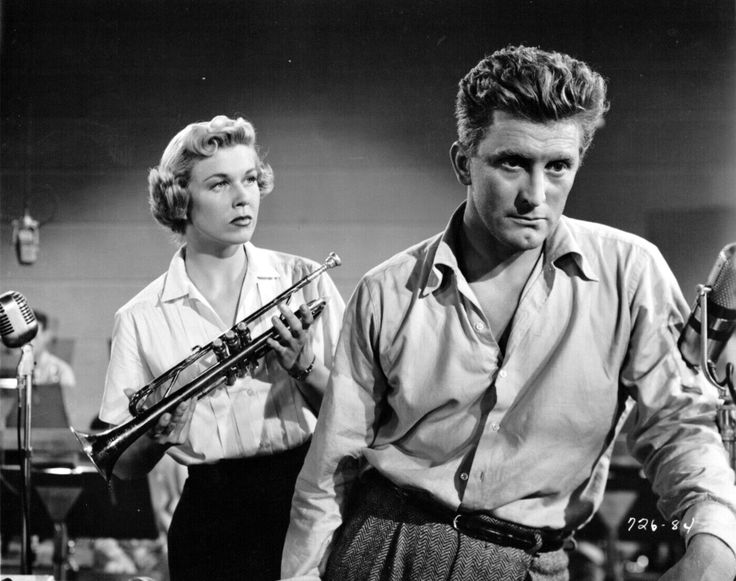
While Henry Fonda and James Stewart were considered for the lead role of Rick Martin, it was decided to cast Kirk Douglas who certainly brought the intensity required for this role. Fascinated by the Biederbecke inspired character, Douglas later said, “Bix was like Larry Bird—the one white guy with rhythm.” The big challenge came in training Douglas to finger the trumpet and mouth the instrument in a highly believable manner for the camera. After all, this would be a major focus of the film with many closeups. Douglas took his preparation for this aspect of the role very seriously. But obviously dubbing from a highly skilled trumpet player would be paramount. Enter Harry James.
Harry James was nearly as impressive of a musician and in career as Carmichael. James’s parents traveled with a circus and taught little Harry to play instrument from a very young age. He also worked with some of the same big names as both Biederbecke and Carmichael, such as Louis Armstrong, Count Basie, Benny Goodman, and many more. As both a trumpeter and a big band leader, Harry James released 30 studio albums, 47 EPs, three soundtrack/stage and screen albums, over 200 singles, with nine songs reaching number one, 32 in the top ten, and 70 in the top 100 on the U.S. pop charts, as well as seven charting on the U.S. R&B chart.
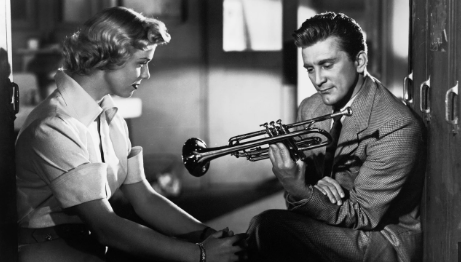
Doris Day was cast as Josephine (another white washing in the script due to Wald’s preproduction memo of “elimination of the colored angle”) to bring in a softer, romantic balance in the love triangle. Day was one of Curtiz’s discoveries, so she held a couple of advantages- this was her fourth film with Warners Brothers and third with Michael Curtiz as director, and she had personal experience in being a big band singer herself, prior to transitioning to acting. This last part was an advantage for the film, but not for Day personally. She began her music career in 1939 singing for big bands: Barney Rapp, Bob Crosby, and Les Brown. She went solo in 1947 and recorded over 650 songs from 1947 to 1967.
However, it was during these early years that she endured a jealous and abusive marriage with then husband Al Jorden (m. 1941 – 1943) who was a trombonist and they had one son together, Terry. She then married to saxophonist George Weidler from 1946 to 1949. Weidler cheated on her and resented being a stepfather to her son. So, the experience of making this film was triggering for Day. On set, Douglas and Bacall were close friends for years and Bacall and Carmichael had worked together in their prior film. As such, Day felt very isolated on set. Douglas later complained that Day ‘wore a mask,’ stating he felt he never got to know her true self under her bubbly persona. Can you blame her?
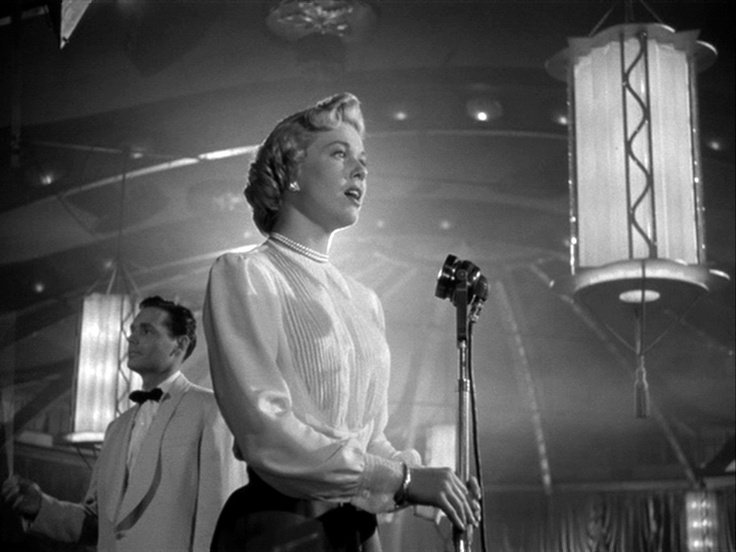
Interestingly, Day met her third husband and manager, Marty Melcher after her original manager, Al Levy became obsessed and started stalking her. Marty and Doris married on her 29th birthday in 1951. Douglas apparently warned Day that Melcher was known for his unethical handling of his clients’ earnings. She didn’t listen. Despite problems in their marriage including Marty’s physical abuse of her son Terry, Day remained married to Marty until his death in 1968. It was only upon his death that she discovered just how much he was indeed embezzling from her and set her up for future projects she personally rejected. Her $20 million was gone and she owed nearly half a million in taxes. It would take her years of hard work to recoup the losses incurred by him.
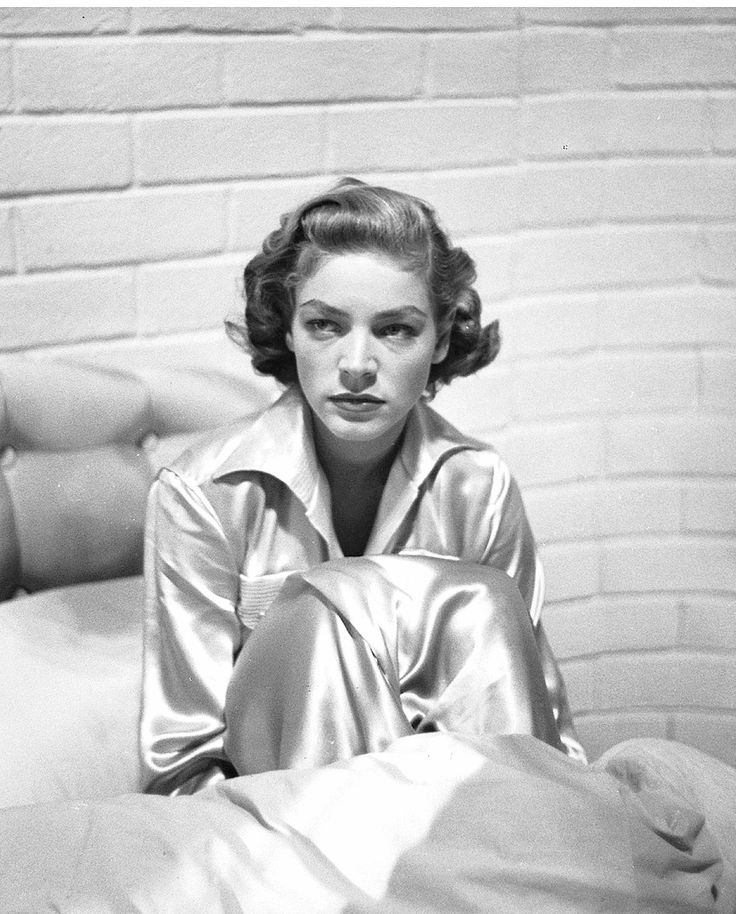
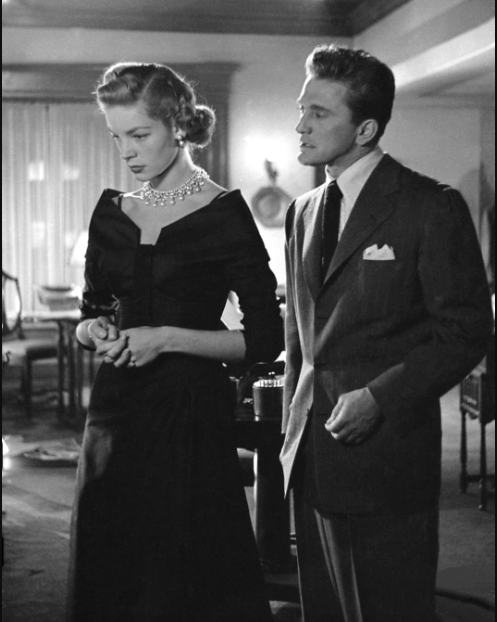
Lauren Bacall began to have second thoughts about the very unsympathetic role of Amy North, the third point in this twisted love triangle. In revising the script, Carl Foreman included the novel’s inferences to Amy’s bisexual nature. Curtiz implored to Bacall that her character has deeply layered complexities of psychology. Which only appeased briefly, then the clashes between the actress and Curtiz continued. Producer Wald noted, “We must do something at once about this Bacall-Curtiz situation. Not only is Bacall acting all over the place, but if the clash continues, it must end up costing us a lot of money… Mike is right in his demand that Bacall play the script the way it is written, and the way Mike wants it played. If Mike has to have a debate on the set every time he shoots a scene, it has to affect the rest of the cast.” She eventually came around.
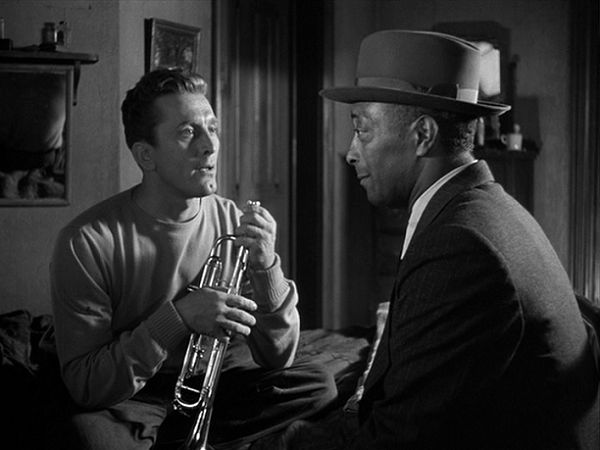
For me personally, the biggest stand out of talent in this talented cast is Juano Hernandez as Art Hazzard. Hernandez of Peurto Rican and Brazilian ancestry, Hernandez steals every scene, no matter how large or small the part. His first major role in INTRUDERS in the DUST (1950) came out the same year and I was lucky enough to experience my first screening at the TCM Film Festival many years ago. A beautiful film and you’ll look for Hernandez in every film in his filmography, thereafter. In this film, he evokes so much, even in scenes with very little dialogue, with his incredibly expressive eyes and gesturing hands.
Over a hundred kids were tested to play the younger version of Rick Martin, with Orley Lindgren snagging it. He does the part justice as the lonely, inquisitive child. Lindgren’s film and television acting credits run from 1943 to 1954, some uncredited or small roles, a few meatier roles such as UNDER MY SKIN (1950). But this film is likely his most memorable.
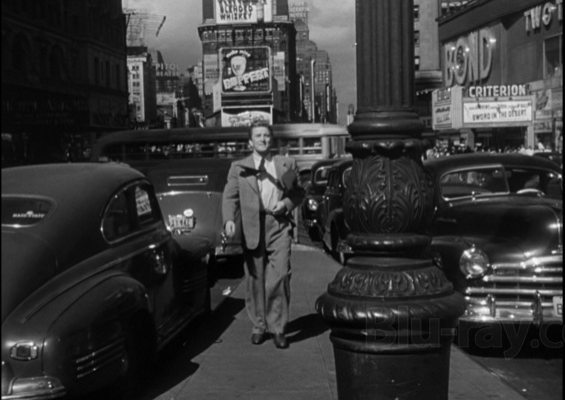
Other notable features of this film include the on-location scenes, shot in Los Angeles and New York, which really ‘jazzes up’ the effective cinematography by Ted McCord.
Despite Warner’s insistence on an upbeat, Hollywood ending and everyone’s else’s objections, the film was financially a hit. It profited nearly a million over the $1.3 million cost.
Themes and points of discussion:
-What examples do we see of ‘white washing’ or ‘white savior’?
-As the narrator, does “Smoke” also display an alternative to the “extremities of jazz life”?
-By October 1947, The Red Scare of communism and the HUAC had reached the industry of Hollywood. Between 1950 and 1954 it reached a fever pitch. In what ways do we see subtle messaging regarding the ‘jazz life’ as a warning in this film?
-“The Lavender Scare” was an attempt to combine communism with queerness as a pervasive perversion, at the same time, but with even more dire results. It began in March of 1950 with two U.S. Senators who began investigating the presence of suspected homosexuals in government positions. They threatened to out them if they refused to resign. 100 government employees resigned but the pressure only intensified. Committee hearings followed including military, doctors, and national labor boards represented, but no groups representing LGBTQ were present. By 1952, homosexuality was added to the Diagnostic and Statistical Manual of Mental Disorders as a “sociopathic” condition. Understanding the stigma and discrimination of this timeline, how does this effect the subtleties of how Amy North’s queerness is presented?
-What examples/dialogue can you give that reveals Amy’s queerness and how does censorship insert a negative spin on her character?
Sources:
“Michael Curtiz: A Life in Film.” By: Alan K Rode. 2017. University Press of Kentucky.
-Popa, Christopher. “Collector’s Checklists: Harry James 33s”. Big Band Library.com. Retrieved January 2, 2016.
–“Recordings by ‘Harry James And His Orch’/’Harry James’/’Harry James And His Orchestra'”. The Honking Duck. Retrieved January 2, 2016.
–Whitburn, Joel (1986). Pop Memories 1890–1954: The History of American Popular Music. Menomonee Falls, WI: Record Research Inc. pp. 73, 123, 226–228, 308, 391–393. ISBN 0-89820-083-0.
–“Music VF, US & UK hits charts”. MusicVF.com. Retrieved January 2, 2016.
-Kowal, Barry. “Hits of All Decades”. hitsofalldecades.com. Retrieved January 15, 2016.
-“ Bix was like Larry”: Kirk Douglas, The Ragman’s Son: An Autobiography (New York: Simon & Schuster, 1988), 442.
-“Sometimes I wonder: The Story of Hoagy Carmichael.” (Hoagy Carmichael with Stephen Longstreet.) New York: Farrar, Strauss, and Giroux, 1965.
-“The truth about Doris Day’s four horrible, tumultuous marriages will break your heart.” By: Erin Doyle. May 13, 2019. NowToLove.com
-“The Lavender Scare.” National Archives Foundation. https://archivesfoundation.org/newsletter/the-lavender-scare/
-imdb


I love this film. Wrote about it years and years ago.
LikeLike