
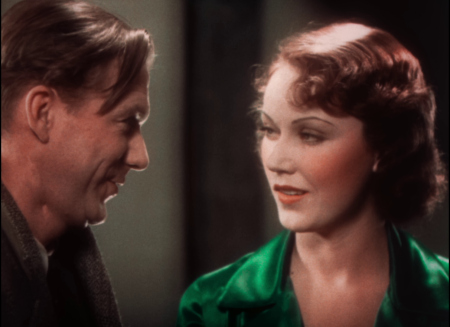
A hodge podge mix of tones – and colors- unexpected in a Pre-Code horror flick. Michael Curtiz’s DOCTOR X remains a stand-out, even more nine decades later. As we explore the filmography of director Curtiz, let’s begin early in his Hollywood years with a Warner Brothers rarity, a horror film.
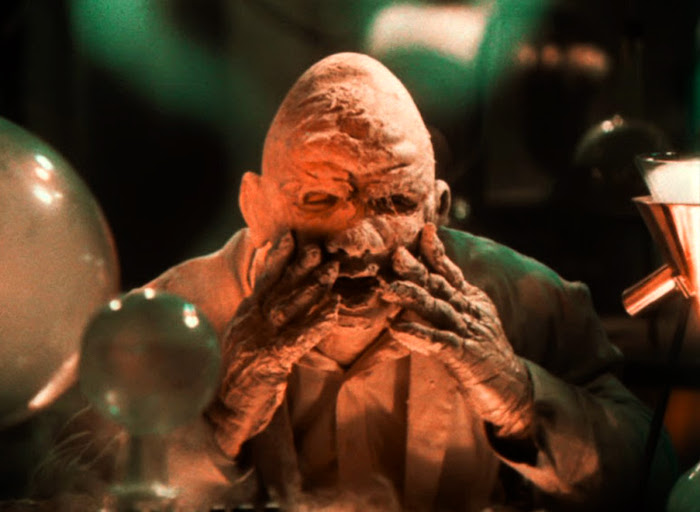
Based on the play “The Terror” by Howard W Comstock and Allen C Miller, the stage production opened in New York on February 9, 1931 and ran for 80 performances. Warner Brothers paid five thousand dollars for the rights in January 1932. That same month, LA Times reported that Loretta Young and Bela Lugosi would headline in this film project. Instead, head of production at WB Darryl Zanuck would sign Fay Wray, who was in pre-production on KING KONG, and Lionel Atwill.
As we discovered in our Universal Horrors class, Carl Laemmle Sr. was not a fan of the horror genre but even he couldn’t deny its popularity and newfound success for his studio. Like Laemmle, Jack Warner was also not a fan of the horror genre but after the successes of Universal Pictures’ DRACULA and FRANKENSTEIN (each released in 1931), but Zanuck knew the timing was prime to take a chance on horror. Additionally, Paramount released DR. JEKYLL and MR. HYDE at the end of 1931 starring Frederic March and Miriam Hopkins with great box office success. An obvious motivation for all these studios during this time was the struggle to fill theaters during the ongoing Great Depression. Horror became their key to survival.
At this time, Warner Bros. was the hard-working studio better known for modest budgets with themes from the mean streets. Their signature style was reflected in Pre-Code dramas such as NIGHT NURSE (1931) starring Barbara Stanwyck and Joan Blondell, gangster films with bankable stars like Edward G Robinson in LITTLE CAESAR (1931) and James Cagney in PUBLIC ENEMY (1931), and plots ripped from newspaper headlines with fast-talking reporters to add some comic relief. Warner Brothers would find a way to include an element of their house style within their new horror flick.
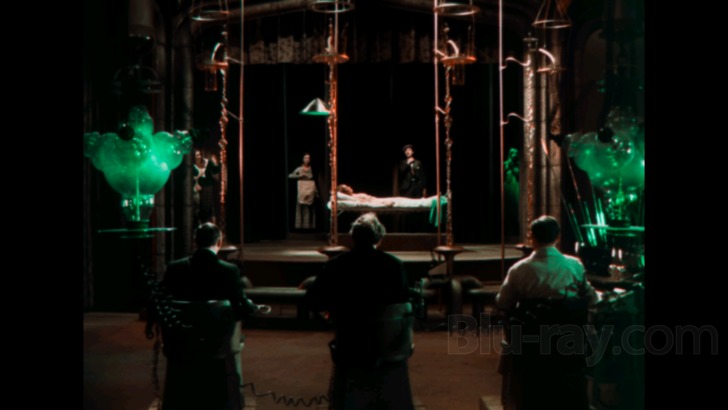
Warner Brothers was near the end of a contract with Technicolor for their 2-strip color process. Except for a few light musicals or musical comedies, most of the studio’s films with their gritty themes were better suited to black-and-white so they were anxious to finish out this agreement. Additionally, Technicolor films cost double than black-and-white. Another challenge to Technicolor filming was the need for four times the lighting- which was literally melting props in a day an age prior to air conditioning. Originally, they planned to use up their Technicolor contract on a collection of shorts but in the end, their new horror film would be the unexpected choice for vibrant shades of green and orangey-pink hues.
Filming was done in both black-and-white and the 2-strip color Technicolor simultaneously. This was technically against Technicolor’s agreement rules, but it was necessary for the many theaters that lacked the capabilities to screen the color prints. The color prints were distributed to major cities and the black-and-white prints were distributed everywhere else, including International. For decades, the Technicolor version of DOCTOR X was considered lost until 1973 when an original color film was found in Jack Warner’s collection. But it was in bad shape. Eventually it was fully restored, and those vibrant hues came back to life. In 1985, the UCLA Film & Television Archive restored a nitrate Technicolor print. In 2021, both UCLA’s FTA and The Film Foundation restored again with more precise tooling. This time, restoration specialist Scott separated colors, repaired tears, removed scratches, and restored sound. This version is the most recently restored Blu-ray that was released in April of 2021.
Michael Curtiz felt the pressure to deliver an impossible filming schedule of twenty days that began on March 19, 1932. Twelve-hour workdays turned into more than fifteen by the second week, which cumulated into more hours on the last week with a continuous twenty-four day of work. Curtiz completed production four days behind schedule with Zanuck cutting several scenes to not fall farther behind.
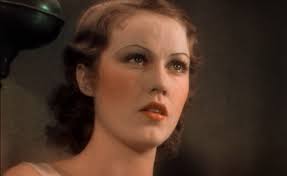
Lead actress Fay Wray may be more famous for her scream for a giant ape the following year, but DOCTOR X was her first horror scream heard on film. The grueling hours and authoritarian methods from Mike Curtiz were memorable for Wray. “[He} was a machine of a person- efficient, detached, impersonal to the point of appearing cynical. He stood tall, military erect; his calculating, functional style made his set run smoothly, without humor. He had a steely intelligence and moviemaking know-how that made you feel there was a camera lens inside his cool blue eyes.” Despite this, both Wray and Atwill went on to work with Curtiz again. And soon. He filmed Bette Davis in THE CABIN in the COTTON that summer of 1932, which was released that October. Beginning in September, production began on the film that is considered the horror twin (or, 2nd in the horror double feature film) of DOCTOR X… THE MYSTERY of the WAX MUSEUM (1933).
Here’s what we need to look for/discuss in our screening:
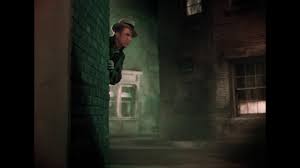
-Shadows, unique angles, “curious camerawork” (dolly shots that follows the action/actors that enhances the storytelling. Where do you see effective examples of this?
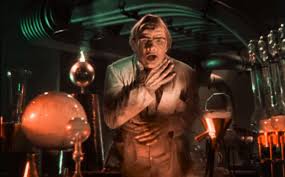
-How does the 2 strip Technicolor add to the cinematic experience? Keep in mind seeing Technicolor for a horror film was a new experience for many audiences who would be seeing a blood splattered lab coat in red, not in black-and-white.
-Themes of cannibalism, illegal use of drugs/alcohol, torture, and serial killers are some of the disturbing themes abound in this Pre-Code. How does that compare to a Universal horror from the same time? Is that why many consider this a cult classic today?
-Touches of humor are offered up, especially through Lee Tracy as the persistent, fast-talking reporter and Leila Bennett as the “shaking like a leaf’ petrified maid. This was a purposeful inclusion to reflect a Warner Brothers hallmark trope, but how does it also serve to balance the disturbing themes?
Cast and crew:
Director- Michael Curtiz
Screenplay- Robert Tasker, Earl Baldwin (based on the play by Howard W Comstock, Allen C Miller)
Producer- Hal B Wallis, Darryl F Zanuck
Cinematography- Ray Rannahan (Technicolor), Richard Tower (black and white)
Production Design- Anton Grot
Film Editing- George Amy
Original Music- Bernhard Kaun
Makeup- Perc Westmore, Ray Romero
Dr. Xavier – Lionel Atwill
Lee – Lee Tracy
Joanne Xavier – Fay Wray
Dr. Wells – Preston Foster
Dr. Rowitz – Arthur Edmond Carewe
Madame – Mae Busch
Mamie- Leila Bennett
 Outspoken & Freckled