
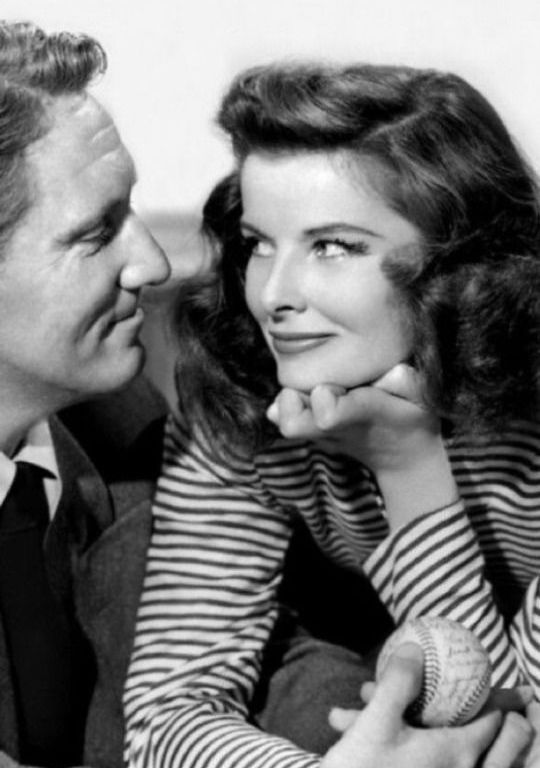
Of all the Golden era Hollywood movie stars, it’s impossible not to think immediately of Katharine Hepburn. Her on-screen career spanned decades. The public has been fascinated with her from the very beginning. Truthfully, we still are.
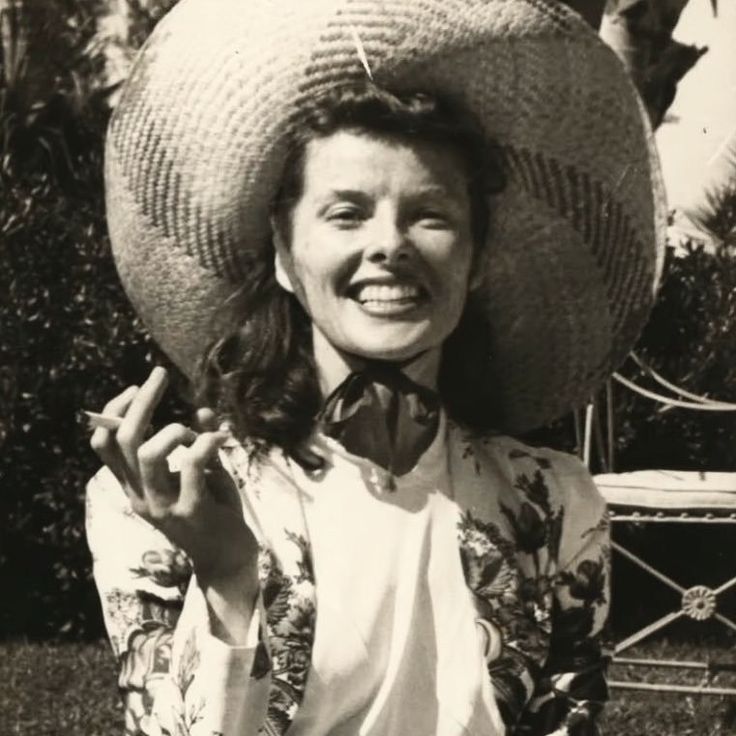
A strong-willed and fiercely independent person, she became a feminist icon. It was in her DNA. She grew up in Connecticut to upper class parents- her father Dr. Thomas Norval Hepburn was a physician, and her mother Katharine Martha “Kit” Houghton was a well-educated, suffragette activist. Both of her parents raised her to be both intellectually and physically active, agnostic, and keenly outspoken on liberal politics. While rearing children, Kate’s mother put her plentiful education to use and worked actively in women’s rights. It is within this work that the Hepburn power couple saw the devastating effects of venereal diseases on families. This became a passion project that combined their medical and intellectual curiosities with medical society and community to support women’s healthcare and contraception.
Kate was born Katharine Houghton Hepburn and raised in the Hartford, Connecticut area, May 12, 1907. She was second-born in the Hepburn household, amongst a total of six Hepburn children:
Tom Hepburn – 1905 – 1921
Katharine Houghton Hepburn – 1907 – 2003
Richard “Dick” Hepburn – 1911 – 2000 (playwright)
Robert Hepburn – 1913 – 2007 (urologist)
Marion Hepburn – 1918 – 1986 (historian/writer/activist, 3 children: Katharine Houghton, Toby Grant, Jack Grant)
Margaret (aka “Peg”) Hepburn – 1920 – 2006 (librarian, married to physicist Dr. Thomas Perry)
The Hepburn household children were given uniquely free childhoods. Education was paramount, but so was fearless physical exercise. Kate was close with her slightly older brother Tom. After her younger brothers were born, Kate was thrilled to be one of the boys in the rough-and-tumble foursome. They were encouraged to master every sport, play as hard as they read. Kate embraced her tomboy childhood, which included cutting her hair very short and she wanted to be called “Jimmy” and treated as a boy. Instead of worrying about safety, the Hepburn parents allowed the kids daredevil play styles, including an example Kate recalls of hoisting ropes high in the 60-foot trees that spanned across their property. Although it’s almost surprising that they survived such an unsupervised, extreme-sports upbringing, Kate referred to her childhood as extremely lucky and very happy.
That care-free joy came to a halt when Kate was 14 and her brother Tom aged 16, visited an aunt in the city. She woke up early the next morning and went to announce breakfast to her brother Tom, who was staying in the bedroom in the attic space. His body was hanging from the ceiling rafter. She laid his cold body on the bed. Unsure of what to do, she ran next door to the neighbor who was a physician. A house servant answered the door. When requesting assistance, and stating that her brother died, the person at the door coldly replied that she wouldn’t need any medical help then and closed the door.
The shock and aftermath of her brother Tom’s death- whether by suicide or by accident- was deepened by the Hepburn family. The cause of death was officially by suicide. No note or clues. Dr. Hepburn tried to convince the newspapers that it was possibly a parlor trick gone accidentally and gruesomely wrong. This was the only time Kate witnessed her mother crying. Kate’s father insisted the family never speak of Tom again and they were instructed to behave as though he never even existed. The Hepburn way was to ‘get on with it’ and never look back. No funeral, no grief, no emotional closure. There was a family history of suicide and “troubles.” Kate’s maternal grandfather died by suicide. Dr. Hepburn’s older brothers died under suspicious circumstances. The Hepburn patriarch’s answer to Tom’s death was to move to another house for a fresh start. As though erasing any memories of Tom from any conversations or familiar familial settings would magically fix it. In an instant, Kate went from being an extremely gregarious, happy, and active child, to being withdrawn and introverted. She took on Tom’s birthday as her own.
Although very bright, Kate struggled in her teen years with school and her parents homeschooled during the high school years. She excelled in private lessons and golfing. Kate followed in her mother’s footsteps by attending Bryn Mawr college. Struggling with shyness, she often ate alone in her room instead of the dorm dining hall. She was called a “self-conscious beauty.” With time, she found friends and a connection in the dramatic arts. Dr. Hepburn was less than impressed when Kate announced she wished to pursue acting.
In her senior year in 1927, Kate met Ludlow Ogden Smith (1899 – 1979) through a mutual friend. “Luddy” was about 8 years older and came from ‘blue blood’ family in Pennsylvania. He was smitten with Kate. On December 12, 1928 months following graduation, they got married at her parent’s home in Hartford. Two weeks later she decided she preferred acting over marriage.
“It was December 1928, I was married. I quit. I went to live in Pennsylvania. I came back to New York and got my job back. Poor Luddy. A proper wife for two weeks. Oh, Luddy! Look out.”
She went back to the New York stage, often as the understudy (including the stage production of “Holiday”) and sometimes fired before the opening night. She fumbled initially, realizing that she delivered her lines in a rapid-fire pace with a high pitch whenever she was nervous. Like everything else in her life, she was determined to carry on the Hepburn spirit with hard work and a can-do persistence that eventually paid off. She continued to perfect her craft (and managed her stage fright) and began to make an impression on Broadway, in the production “The Warrior’s Husband” (1932). She’s offered a screen test by RKO.
Her very first film, George Cukor’s THE BILL of DIVORCEMENT (1932) is not only is a co-starring role with John Barrymore, but it’s also a big hit. She signed with RKO with a studio contract. With her third film, MORNING GLORY (1933), she earns her first Best Actress Academy Award. Assuming she couldn’t possibly win, she didn’t attend the Oscar ceremony. During this time, she learns how to navigate the studio system, the Hollywood machine and fame. Living separate lives for most of their marriage, Katharine kept her marriage a secret while in Hollywood. Her friendship with socialite Laura Harding was rumored to be romantic when the two friends/aspiring actors arrived in Hollywood simply because Hepburn defied the gender norms, preferring career over marriage and children. After a couple of affairs (such as with Howard Hughes), Kate knew it was not fair to Luddy to continue. On May 8, 1934, they quietly divorced in Mexico. She felt deeply that she was not marriage material. Her quick rise to fame was followed by a series of miscast flops after the huge success of LITTLE WOMEN (1933) and she’s labeled “box office poison.” She retreats to her beloved summer home at Fenwick in the Autumn of 1938 following a devastating hurricane to help rebuild.
While rebuilding their family home in Fenwick, the dramatist Philip Barry arrives with a play he wrote specifically for her. She stars in this tailored role on Broadway 1939 for over 400 performances. In a savvy business move, Kate purchased the film rights (as gifted to her by Howard Hughes) and sold again to MGM with the condition that she play the leading role. In salary negotiation, Kate deferred a salary for 45% of the profits. She requests the biggest movie stars of the day, Spencer Tracy and Clark Gable, to co-star, but the roles ultimately went to Cary Grant and James Stewart. Grant earned top salary then donated it entirely to the British War Relief.
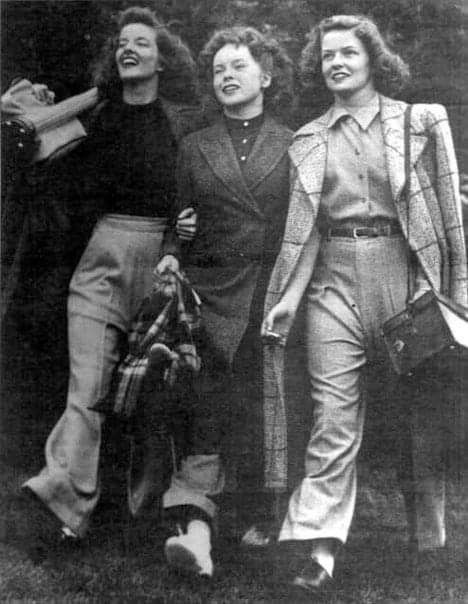
Kate’s fondness for wearing pants and presenting a more androgenous look was not exactly unheard of in Hollywood. Big stars like Greta Garbo and Marlene Dietrich brought a sexuality to women wearing menswear. Hepburn, however, didn’t bring as much glam or sex appeal with her dungarees. She only cared to be practical and comfortable. A reflection of her tomboy youth and freedom. It ruffled a few feathers on the studio lot. One day on set her dungarees went missing after complaints. In true Kate rebellion, she walked around in her underwear until they were returned to her.
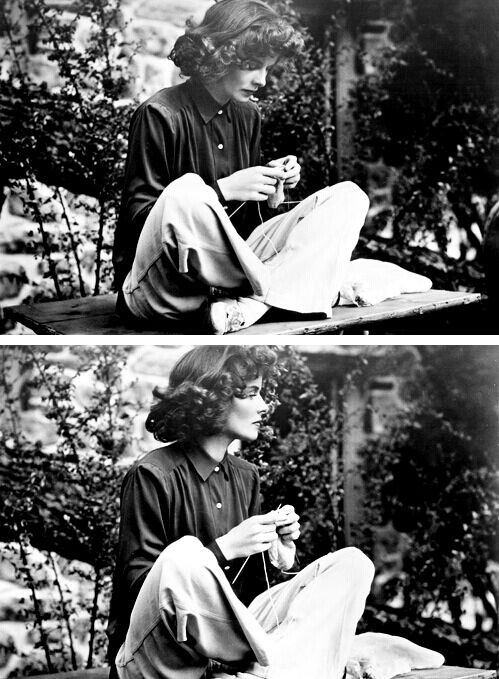
The 1940s was a pivotal time for American women. When the men went off to war, women were asked to step out of their conventional standards of domesticity, and into the factories. While Kate was not prone to expressing her politics via organized marches like her mother, she did engage in social causes by using her platform. She narrated a 1941 documentary short, “Women in Defense,” directed and produced by John Ford and written by First Lady Eleanor Roosevelt, calling on women to contribute to the war effort with industrial work and volunteering. In George Cukor’s KEEPER of the FLAME (1943), Spencer Tracy and Hepburn investigate themes of fascism and war heroism.
Early in the McCarthyism movement in May 1947, in opposition to the HUAC and in support of progressive Presidential candidate Henry Wallace, Hepburn delivered a speech written by screenwriter (and later blacklisted) Dalton Trumbo. She claimed to not be political but felt compelled as her industry was under attack.
Speech excerpt: “Silence the artist, and you silence the most articulate voice the people have. Destroy culture and you destroy one of the strongest sources of inspiration from which a people can draw strength to fight for a better life.”
To support the “Hollywood Ten,” Directors John Ford and William Wyler, actress Myrna Loy, and screenwriter Philip Dunne formed the CFA (Committee for the First Amendment) in September of 1947. A long list of Hollywood top stars who joined CFA included Danny Kaye, Humphrey Bogart, Bette Davis, Judy Garland, and Katharine Hepburn.
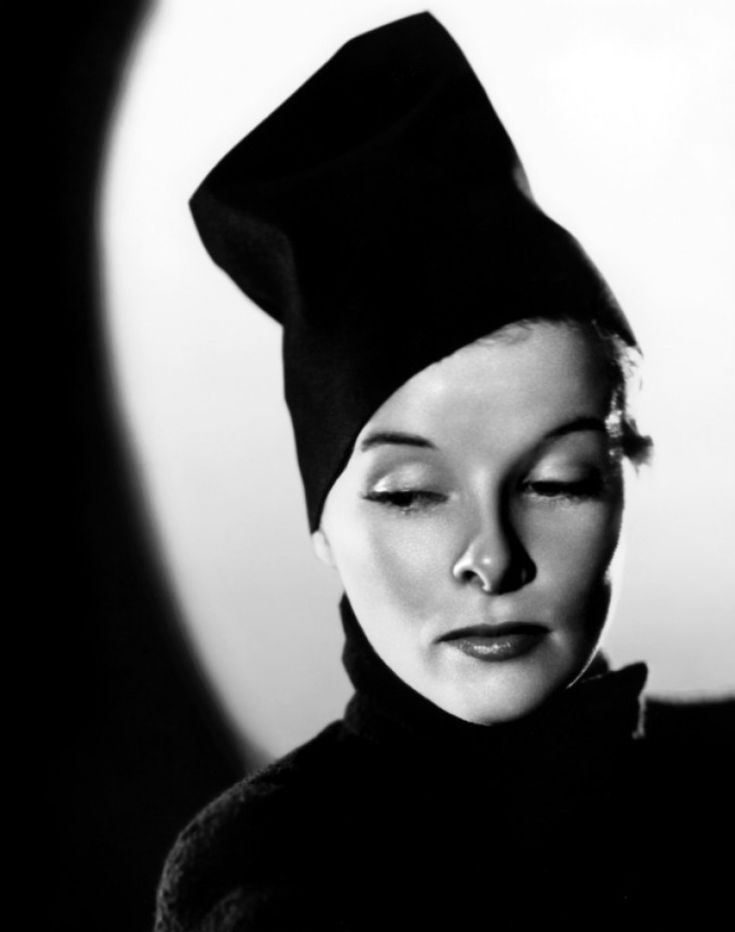
Following the success of optioning the film rights to THE PHILADELPHIA STORY, Kate worked on developing another film project. With friend Garson Kanin (who conceived the story) and screenwriter Ring Lardner Jr, she pitched the film to MGM. In George Stevens’ WOMAN of the YEAR (1942), she co-starred with Spencer Tracy. This would be the first of nine films that the two starred together. They had an open Hollywood secret love affair that lasted nearly 27 years, until his death in 1967. Their palatable on-screen chemistry remains one of the most enduring screen couple legends of all time. Hepburn and Tracy were different in practically every way. Opposites in background, in acting styles, in personality. Their very first meeting has been quoted- and generally misquoted- a great deal. Here’s what really happened.
According to lifelong collaborator and Hollywood legendary screenwriter Garson Kanin (1912 – 1999) who wrote several Kate and Spence films, Kate was known for strategic powerplay whenever scheduled to meet Hollywood “front office” men. At MGM, many of these big wigs such as LB Mayer were notably more diminutive in height, and Kate loved to tower over them to add to her confidence in business dealings. Already a healthy height for a woman at five foot eight, she would wear not only her iconic trousers, but also added platform shoes that lifted her another 3-4 inches to give her a posturing advantage. When it came time to meet Spencer Tracy for WOMAN of the YEAR prior to production, Kate thought it’d be great fun to do the same to her new co-star.
“He was a big man- in every way -but not exceptionally tall: five foot ten and a half inches. Joe Mankiewicz, the producer, introduced them. “Hello,” she said. “How are y’?” She looked Spencer over, tip to toe, as though she were considering buying him. Then she smiled her friendliest smile and said, “You’re rather short, aren’t you?”
“Don’t worry, honey,” said Mankiewicz, trying desperately to extinguish Spencer’s glare. “He’ll cut you down to my size.”
And thus began the on-screen and off-screen romantic pairing of the ages. Spencer Bonaventure Tracy was born in Milwaukee, Wisconsin on April 5, 1900 to a working class family. He left school to enlist in the Navy during WWI. Following the war, he and classmate Pat O’Brien did some acting in college and they decided to attend the Academy of Dramatic Arts in New York to continue their acting pursuits. John Ford spotted Tracy in the critically acclaimed stage production of “The Last Mile” and signed him to the film, UP THE RIVER (1930) at the small studio, William Fox Film Company. He spent five years with his talents not fully noticed until the small studio merged into the larger Twentieth Century-Fox. Tracy garnered a better deal in this business upheaval and took the opportunity to sign with MGM in 1935, with Irving Thalberg. Finally, his career took off with many big hits to follow.
Spence was comfortable in his own skin. He possessed a natural acting style, with a trustworthy, approachable authenticity. Very manly and mature, with a quiet confidence. He was a calming presence that grounded her frenetic energy. Hepburn was distinct in every way- from her accent to her punctuated demeanor that was both high-brow and fierce. She adored him from the jump. Their chemistry could barely be contained.
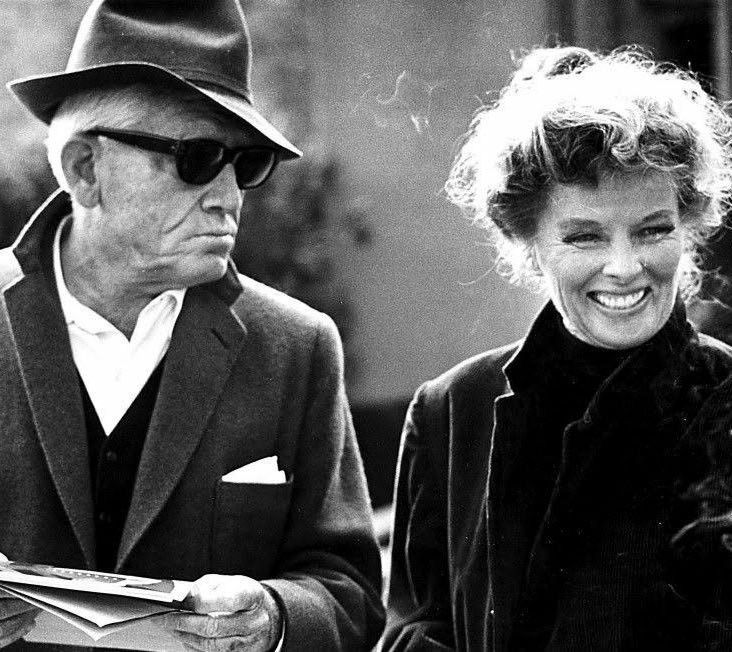
But he was old school Irish Catholic- and married. Spencer Tracy married Louise Ten Broeck Treadwell (1896 – 1983) in September of 1923, after knowing each other for 6 months. They had two children together- John and Susie. John was born in June of 1924 (you do the math), and it was discovered in infancy that John was deaf and later developed polio. Louise worked with medical teams and specialized education to give John the best care. Daughter Susie was born in July of 1932. Louise and Spencer separated from 1932 to 1935, then the family moved to Encino, California in March of 1935. Although not legally separated, Spence and Louise lived separate lives and residences beginning in the 1940s and for the duration of his life. They never divorced and he left his entire estate to Louise, his children, and his brother. Louise established the John Tracy Center in 1942 as a resource to fellow parent with children of deafness. Spencer was the sole financial patron, and the organization continues to this day. Before meeting Kate, Spence had several affairs with co-stars including Gene Tierney, Ingrid Bergman, Myrna Loy, and Loretta Young. Feeling the burden of entrapment of a double life, Spence suffered alcoholism and diabetes.
While Tracy had no intention of getting a divorce, Hepburn had no intention of ever getting married. The two continued their own successful careers, each making many films outside of the nine they made together. They spent as much time together as they could, doing their best to remain discreet. They always kept separate hotels if working in the same city, and Kate would sneak in back entrances, even across fire escapes and rooftops. During the early 1960s, Tracy’s health grew much worse, requiring bedrest and sometimes hospitalizations. Hepburn remained by his side. They each took acting gigs during periods when his health seemed more stable. But his last films required a patient crew with scenes that involved little action to accommodate their ill star.
Their last film together, GUESS WHO’S COMING TO DINNER? (1967) brought Kate her second Oscar. Spencer Tracy completed his last scene on May 24, 1967. He died of a heart attack June 10, 1967, just 17 days after filming. Kate was with him in his final days. When she contacted his wife following his death, she let her know that she would not attend the funeral in respect for her and his children. Despite that Kate and Spence were together for 27 years until his death, Louise incredulously remarked to Kate that she thought Kate was only a rumor. Amongst the other nods and Kate’s Oscar for GUESS WHO’S COMING TO DINNER, Tracy was nominated (yet didn’t win) posthumously for Best Actor. Hepburn yet again did not attend the ceremony to accept her Oscar.
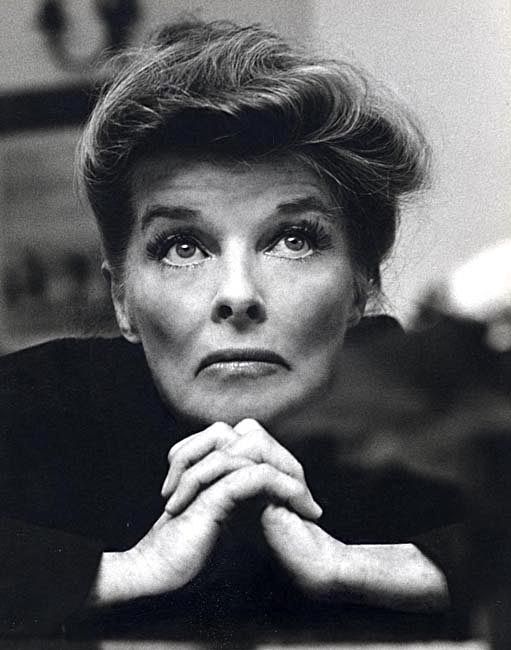
Kate would find herself being shut out of attending funerals for the two most significant men in her life- her brother Tom and the love of her life, Spencer Tracy. Her mother had died in 1951, the same year she made THE AFRICAN QUEEN, and her father passed in 1962. In typical Kate energy, she was in her early 60s with her second Oscar in hand when her active career in films and on stage was still in full force. The year following, she starred in THE LION in WINTER (1968), which would bring her third Oscar win. Her fourth Oscar win, for ON GOLDEN POND (1981), she kept the tradition of not attending the Academy ceremony. She was 74 years old at the time. To this day, Katharine Hepburn holds the record of most Academy Awards for acting (both Best Actress and Best Actor) in history.
Her last screen appearance was a Truman Capote scribed made for television story, “One Christmas” in 1994. Her more notable tv appearances were a few talk show interviews, including the famed Dick Cavett Show episodes in September and October of 1973. Even in retirement, she was known for her dynamic personality and active physicality, often riding her bicycle and swimming. She passed at her beloved home in Fenwick, Connecticut on June 29, 2003. She was 96 years old.
In my Kate Hepburn class, I asked my students the following… as we explore and discuss Ms. Hepburn’s filmography, please keep her life experiences in mind. In what ways do we see her evolve from her earliest roles to her later years? How does her distinct New England accent become part of her on-screen persona? How did her successes and failures shape her work? What chemistry do you see when she’s on screen with Spencer Tracy? How did her upbringing in social activism and politics with a competitive focus on both academics and athletics shape the roles she pursued? What enduring influence do you believe she had on actors during and after her time in Hollywood— and on everyday people, as well? What examples do you see of how her film roles either parallel, or reflect, or goes against her real-life perspective? How did those iconic and somehow controversial dungarees give a rise to feminist and independent thought for American women?
Sources:
“The Leading Men of MGM.” By: Jane Ellen Wayne. New York: Carrol and Graf, 2005.
“Tracy and Hepburn.” By: Garson Kanin. NY, NY: The Viking Press, 1971.
“Me, Stories of My Life.” By: Katharine Hepburn. Penguin Group, NY, 1991.
“Kate: The Woman Who Was Hepburn.” By: William J Mann. Henry Holt and Co. 2006.
“The Dick Cavett Show” September 14, 1973, October 2, 1973.
“Politics and the Star Persona of Katharine Hepburn” by: Be Kind Rewind, YouTube.
“Katharine Hepburn Progressive Party speech 1947- anti HUAC” by: thedivinemisshepburn, YouTube
“The Ace and the Hurricane: Katharine Hepburn’s Whirlwind Day at Fenwick.” By: Joe Passov. Links Magazine.com. Winter 2024.
IMDB
 Outspoken & Freckled