
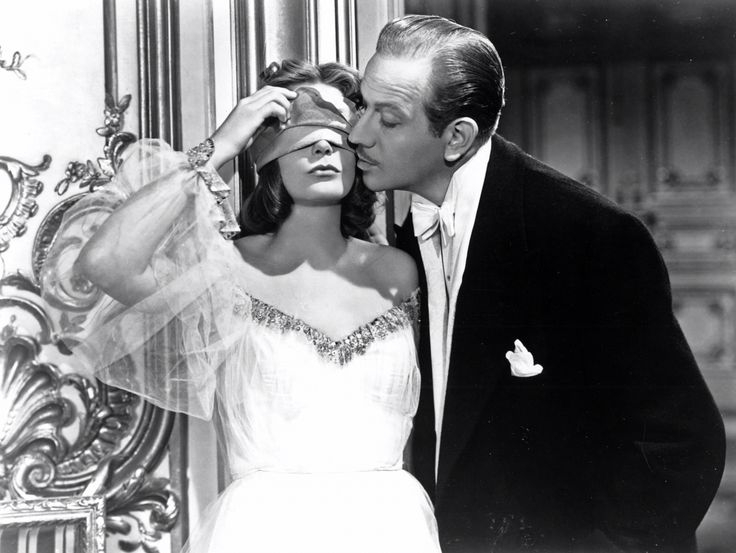
As we discovered through my class, 1939: The Greatest Year in Cinema History, this timeline was an extremely busy year- on screen, in the Hollywood studios, and in the world. Following the discussions of films like CONFESSIONS of a NAZI SPY (1939) and THE MORTAL STORM (1940) which highlighted the rise of Germany’s Nazi party, we transitioned to the Russian side of political arena in Ernst Lubitsch’s NINOTCHKA (1939).
By the end of the 1930s, like Germany, the Soviet Union was strategically building power. Diplomacy on paper was often in contrast with actions taken by Germany and Russia. Europe was like a chess board and both Stalin and Hitler were hoping to play the other countries like pawns. It was a surprise to the world when, shortly prior to the breakout of war in the autumn of 1939, the two enemies signed the German-Soviet Nonaggression Pact. Intended as a facade of alliance so both could invade Poland, with more countries to follow as each had time to build armies. Whether the two super powers were friends or enemies would be played out until Stalin was surprised by Germany’s invasion into Russia in June 1941. The pact was broken and Hitler’s true intentions of being the sole power of world domination became clear.
Meanwhile, Stalin was waging war on his own citizens. “The Great Purge” aka “The Great Terror” was Stalin’s diabolical campaign to eliminate any dissenters (anyone connected with former leader Lenin’s former Bolshevik party). It’s estimated that between 1936 and 1938 he ordered the executions of approximately 750,000 people, with more than an additional million sent to forced labor camps, known as “gulags.” If that wasn’t ruthless enough, in the early ‘30s Stalin starved millions in the Ukrainian famine aka the “Holodomor,” which occurred when he replaced small farms with state-run collectives in addition to punishing its citizens through systemic starvation.
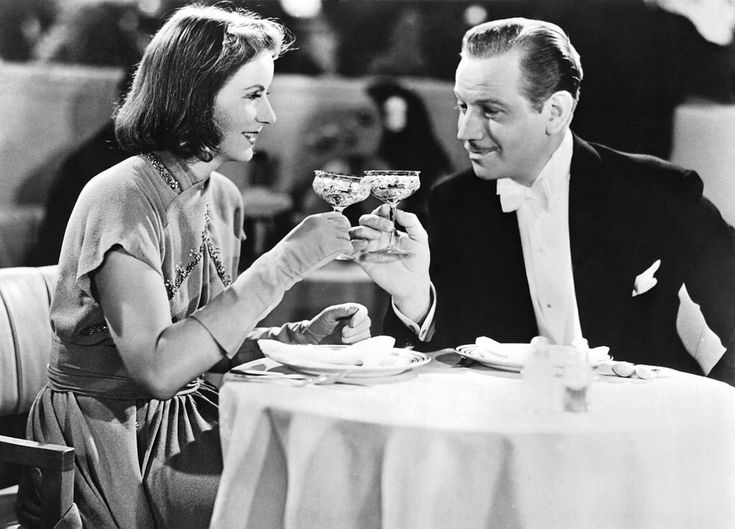
Is all of this bringing you down? No worries, NINOTCHKA is guaranteed to bring the laughter. This sets the stage of the complicated politics and subverted diplomacy as we watch Ernst Lubitsch take on Communism and these themes- along with his screenwriters Billy Wilder, Charles Brackett and Walter Reisch- with brilliant humor. How else can you poke fun of ruthless dictators like Stalin and Hitler? The political satire is written and directed so cleverly via dialogue, characters, and plot that the audience is both entertained and “in the know.” Despite mastering political satire to pass the censors, it’s not surprising that Stalin was displeased. The Soviet Union and its satellites banned NINOTCHKA.
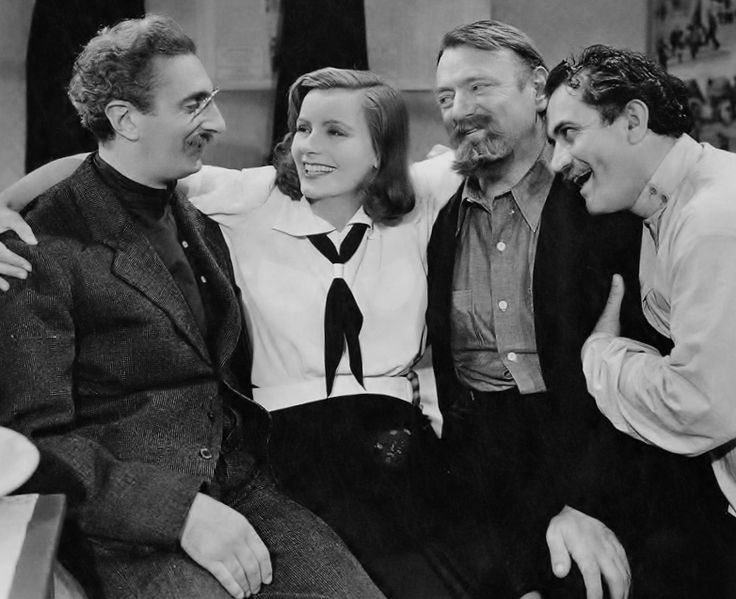
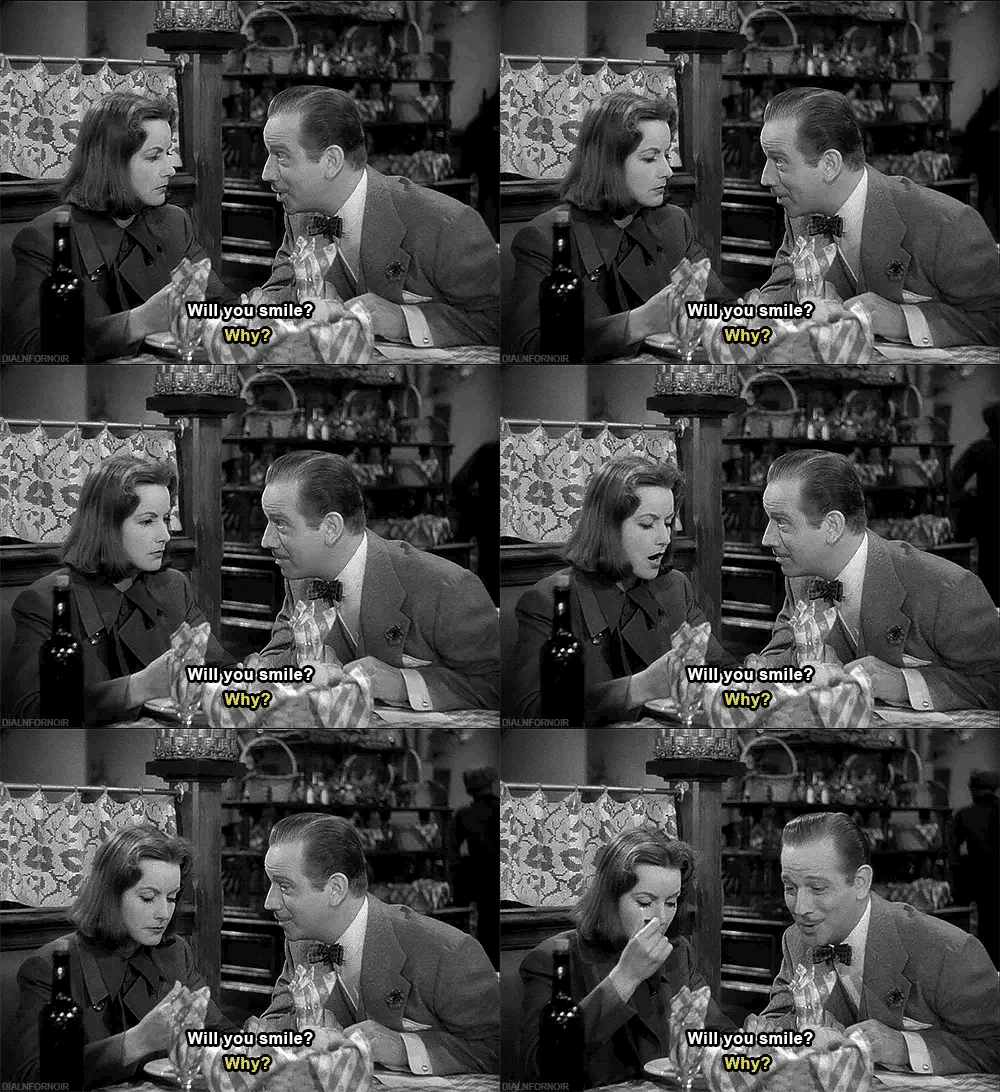
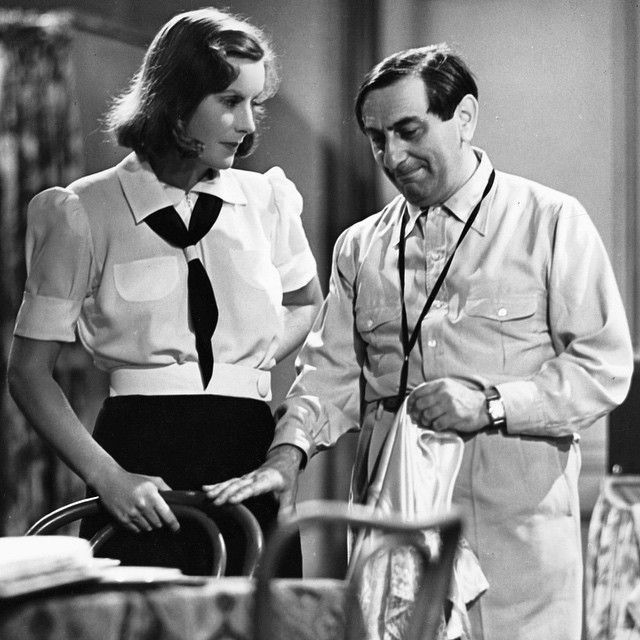
In contrast to the brutalism of Soviet politics, humor delights in NINOTCHKA while it still hammers the message home. We witness a softening of Geta Garbo’s icy façade as her character experiences a new world and new possibilities… and love. She and her 3 comrades evolve from protecting the strict limitations of their communist life to embracing the materialistic spoils of capitalism. When we are introduced to Ninotchka, she is a serious, no nonsense and no embellishment character. She eventually blossoms. Her uniform is replaced by designer Adrian’s high-end fashions (including a hat sketched by Greta Garbo and created by Adrian). Her somber stone face is replaced by relaxed smiles… and even laughter! The iconic tagline, “Garbo laughs!” which was promoted heavily for this film was a reflection of the transition of her on-screen dramatic persona from the silent era when her first talkie, ANNA CHRISTIE (1930) was promoted with the tagline, “Garbo talks!”
Along with other awards, NINOTCHKA was nominated in 4 Academy Award categories including Best Picture, Best Actress in a Leading Role (Greta Garbo), Best Writing, Original Story (Melchior Lengyel), and Best Writing, Screenplay (Charles Brackett, Walter Reisch, Billy Wilder). Although uncredited, director Ernst Lubitsch was also a major contributor to the screenplay writing, as well. Billy Wilder stated they pleaded to the Writing Guild to add his name in writing credits but Lubitsch humbly declined. Knowing that Billy Wilder was a huge admirer of his mentor Lubitsch and would go on to become well known as a writer/director, this isn’t surprising.
Questions to ponder:
How do we see the Russian characters evolve?
What symbolism do hats play a role?
In what examples do we see poking fun at Communism… and celebrating capitalism?
What inside jokes do you see?
What examples do you see of the famed “Lubitsch touch”? (European sophistication, style, subtlety, wit, charm, elegance, suavity, polished nonchalance, audacious sexual nuance…)
Billy Wilder and Charles Brackett were later known for adapting the “Snow White” fairytale in the screwball comedy, BALL OF FIRE (1941). Could Ninotchka and her three comrades be representative of another fairytale story?
PRODUCTION:
Directed by … Ernst Lubitsch
Screenplay by … Melchior Lengyel (original story/draft), Charles Brackett, Billy Wilder, Walter Reisch
Produced by … Ernst Lubitsch, Sidney Franklin
Cinematography by … William H. Daniels
Music by … Werner R. Heymann
Distributed by … Metro-Goldwyn-Mayer
Release date … November 9, 1939
Budget … $1.4 million/ Box office $2.3 million
CAST:
Greta Garbo … Nina Ivanovna “Ninotchka” Yakushova
Melvyn Douglas … Count Leon d’Algout
Ina Claire … Grand Duchess Swana
Bela Lugosi … Commissar Razinin
Sig Ruman … Iranoff
Felix Bressart … Buljanoff
Alexander Granach … Kopalski
Rolfe Sedan … hotel manager
Gregory Gaye … Count Alexis Rakonin
Edwin Maxwell … Mercier
Richard Carle … Gaston
Tamara Shayne … Anna
George Tobias … Russian visa official
Charles Judels … Pere Mathieu, café owner
Edwin Stanley … Soviet lawyer
 Outspoken & Freckled